
01
Gas or Exhaust Collection
Flare lines collect process gas, relief gas or flare gas from pressure relief systems. Chimneys collect flue gas, smoke, hot air or exhaust gas from boilers, DG sets, furnaces or industrial processes.
Zenvent Engineering provides professional Flare Lines or Chimneys solutions for oil and gas plants, refineries, petrochemical plants, chemical plants, pharmaceutical facilities, power plants, boiler rooms, DG set exhaust systems, furnaces, manufacturing plants, food processing plants, textile plants, industrial utility systems and process vent systems.
Flare lines and industrial chimneys are important parts of plant safety, exhaust discharge, process venting and emission handling systems. A flare line piping system safely carries process gases, relief gases or flare gases to a flare stack, while an industrial chimney or chimney stack discharges flue gas, exhaust gas, smoke or process exhaust into the atmosphere at a suitable height.
Zenvent Engineering offers complete flare line and chimney services including flare line design, flare line fabrication, flare line installation, flare header piping, flare stack installation, industrial chimney design, chimney fabrication, chimney erection, boiler chimney installation, DG exhaust chimney installation, chimney insulation, chimney cladding, painting, coating, testing, commissioning, maintenance, repair and AMC service.
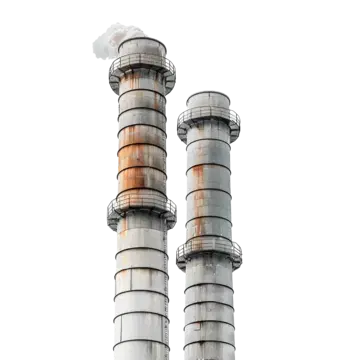
Flare Lines or Chimneys are industrial systems used for safe gas venting, exhaust discharge and process emission control. Flare lines are mainly used to route gases toward a flare stack for safe disposal, while chimneys are used to discharge flue gas, smoke, hot exhaust or industrial process air from boilers, generators, furnaces and factory exhaust systems.
Flare lines are piping systems used to carry relief gas, process gas or waste gas from plant equipment to a flare stack or flare chimney. These lines are commonly used in refineries, oil and gas plants, petrochemical plants, chemical plants and process industries.
Industrial chimneys are vertical exhaust stacks used to release flue gas, smoke, hot air, DG exhaust, boiler exhaust or process exhaust safely into the atmosphere. They are also called chimney stacks, exhaust chimneys, flue gas chimneys, boiler stacks, DG exhaust chimneys, smoke stacks or emission stacks.
The main purpose of flare lines and chimneys is to support safe gas disposal, proper exhaust discharge, plant safety, pressure relief, emission management and efficient equipment operation.
Flare lines and chimneys are used in refineries, chemical plants, petrochemical industries, pharmaceutical plants, power plants, boiler rooms, DG exhaust systems, furnaces, process plants, manufacturing facilities, industrial utility systems and factory exhaust systems.
A flare line carries gas to a flare system for safe venting or combustion. A chimney stack discharges exhaust gas, smoke or flue gas from equipment such as boilers, furnaces, DG sets or industrial exhaust systems.
Flare lines and chimneys work by collecting gas or exhaust from equipment, transferring it through piping or ducting, controlling pressure and flow, and safely releasing or burning it through a stack.
Flare lines collect process gas, relief gas or flare gas from pressure relief systems. Chimneys collect flue gas, smoke, hot air or exhaust gas from boilers, DG sets, furnaces or industrial processes.
The collected gas moves through flare line piping, flare header piping, chimney piping, flue gas ducting or exhaust gas ducting based on the system design.
Proper flare line sizing, chimney diameter, pressure drop calculation and support design help maintain safe flow and reduce back pressure problems.
Flare systems safely route gas to a flare stack where flammable gas can be burned or released as per system design and safety requirement.
Industrial chimneys discharge boiler exhaust, DG exhaust, furnace exhaust or process exhaust at a suitable height to support safe dispersion.
A properly designed flare line or chimney system supports emission control, plant safety, draft performance and equipment protection.
Flare lines and chimneys include piping, stacks, supports, safety parts, access systems, insulation and structural components.
A flare header collects gases from different relief points and transfers them toward the flare stack.
The flare gas line carries flare gas from process equipment or relief systems to the flare header or stack.
A flare stack is the vertical structure where flare gas is discharged or burned safely.
The flare tip is located at the top of the flare stack and supports safe gas burning or discharge.
A knockout drum connection helps remove liquid droplets from flare gas before it reaches the flare stack.
A purge gas line helps maintain safe flow conditions inside the flare header and reduces the chance of air entering the system.
A flame arrestor helps prevent flame travel in selected flare or vent line applications.
Pressure relief valve connections route relief gas from equipment to the flare line or flare header.
An industrial chimney stack is the vertical exhaust structure used for flue gas, smoke or exhaust gas discharge.
A flue gas duct connects boilers, furnaces or process equipment to the chimney stack.
An exhaust stack discharges hot exhaust air, smoke or process gases from industrial equipment.
Support structures hold flare lines, stacks, chimneys and piping in safe alignment.
Expansion joints absorb thermal movement caused by high temperature gas or exhaust flow.
Access platforms allow safe inspection, maintenance and service of chimneys, flare stacks and components.
Ladders and safety cages provide safe access for chimney inspection, painting, cleaning and maintenance.
Drain connections remove condensate or liquid accumulation from piping or stack sections.
Insulation and cladding protect hot surfaces, reduce heat loss and improve safety.
The foundation and anchor bolts support the chimney or stack structure and help maintain stability.
Zenvent Engineering provides different flare line and chimney solutions based on industrial process, safety requirement, exhaust type, temperature, pressure and site conditions.
Elevated flare lines route gas toward a high flare stack for safe disposal in industrial plants.
Ground flare lines connect process gas systems to ground flare arrangements depending on project requirement.
Flare header piping collects relief gases from multiple sources and carries them toward the flare system.
Emergency flare lines are used for pressure relief or emergency venting conditions in process plants.
Process vent flare lines safely route process vent gases toward flare systems.
A boiler chimney discharges flue gas from boiler systems at a suitable height.
A DG exhaust chimney removes diesel generator exhaust gas safely from the generator room or plant area.
A furnace chimney carries hot exhaust gas from furnace systems.
A process exhaust chimney is used for industrial exhaust from process equipment, production lines or utility systems.
A self supported chimney stands independently with its own structural strength and foundation support.
A guy wire supported chimney uses steel wires for added support and stability.
Steel chimneys are commonly used for boiler exhaust, DG exhaust, furnace exhaust and industrial exhaust applications.
Stainless steel chimneys are suitable for corrosive, hygienic or special industrial exhaust applications.
FRP chimneys are used for chemical exhaust or corrosive gas applications where material compatibility is important.
A single wall chimney is used where insulation is not required or where operating temperature and site conditions allow it.
A double wall insulated chimney is used for hot exhaust gas, safety, condensation control and heat protection.
Material selection is important for safety, corrosion resistance, temperature handling, structural strength and system life.
Mild steel is used for many industrial chimney and exhaust stack applications where standard strength and fabrication are required.
Carbon steel is commonly used in flare line piping, flare header piping and industrial gas line applications.
Stainless steel is used where corrosion resistance, high temperature performance or clean exhaust handling is required.
Alloy steel may be selected for high temperature, high pressure or special process gas conditions.
FRP is used for corrosive exhaust or chemical fumes where metallic materials may not be suitable.
Galvanized steel can be used in selected exhaust and chimney ducting applications based on temperature and corrosion requirements.
Insulated steel construction is used for hot exhaust gas systems, boiler chimneys, DG exhaust chimneys and double wall chimneys.
High temperature coating protects chimneys and stacks exposed to hot gas or outdoor conditions.
Anti-corrosion coating helps protect steel chimneys, flare lines and support structures from rust and chemical attack.
Material selection depends on gas composition, operating temperature, operating pressure, corrosion risk, emission type, structural load, safety requirement and project budget.
Flare lines and chimneys are used in industrial plants where gas disposal, exhaust discharge, flue gas handling and process ventilation are required.
Flare line piping is used in oil and gas plants for safe venting and pressure relief gas handling.
Refineries use flare header piping, flare stacks and flare gas piping for process safety and emergency relief systems.
Petrochemical plants need flare systems and chimneys for process venting, pressure relief and exhaust discharge.
Chemical plants use flare gas lines, process exhaust chimneys and FRP chimneys depending on gas composition and corrosion risk.
Pharmaceutical facilities use industrial chimneys, process exhaust systems and utility exhaust stacks for controlled discharge.
Power plants require boiler chimneys, flue gas stacks, exhaust stacks and industrial chimney systems.
Boiler rooms need boiler exhaust chimneys and flue gas chimneys to discharge hot gases safely.
DG exhaust chimneys remove diesel generator exhaust gas from generator rooms and industrial utility areas.
Furnace chimneys and furnace exhaust stacks discharge hot combustion gases from furnace systems.
Manufacturing plants use factory chimneys, process exhaust chimneys and industrial exhaust stacks.
Food processing plants may require boiler chimneys, process exhaust chimneys and utility exhaust stacks.
Textile plants use industrial chimney systems for boiler exhaust, process exhaust and utility systems.
Industrial utility systems use flare lines, boiler stacks, DG chimneys and exhaust chimneys.
Process vent systems use flare lines or chimneys to route gas, fumes or exhaust safely away from equipment and work areas.
Factory exhaust systems use chimney stacks and exhaust chimneys to discharge process air, smoke or heat.
Proper flare line and chimney systems improve safety, exhaust performance, equipment operation and long-term reliability.
Flare line piping helps route gas to a safe disposal point and reduces unsafe gas release.
Industrial chimneys discharge flue gas, DG exhaust, furnace exhaust and process exhaust at a suitable height.
Correct flare line and chimney design supports safe process operation and reduces system risks.
Proper pipe sizing, chimney diameter and flow calculation help reduce back pressure problems.
Correct chimney height and diameter support better draft and smooth exhaust flow.
A well-designed chimney or flare system supports controlled exhaust discharge and emission handling.
Flare header piping and pressure relief connections help protect process equipment from overpressure conditions.
Proper boiler chimney and furnace chimney design helps maintain draft and exhaust performance.
Industrial exhaust stacks and chimneys remove heat, smoke and exhaust gas from plant areas.
Correct material, coating, insulation and support design help increase flare line and chimney service life.
Flare line design should be planned carefully to ensure safe gas handling, pressure control and reliable system operation.
Gas flow rate determines flare line size, flare header capacity and flare stack requirement.
Gas composition affects material selection, safety planning, corrosion protection and flare design.
Operating pressure helps define pipe thickness, pressure class, testing requirement and safety controls.
Operating temperature affects material choice, thermal expansion, insulation and support design.
Pressure drop must be controlled to avoid system performance issues and high back pressure.
Back pressure limitation is important for pressure relief valves and safe system operation.
Flare header sizing is based on relief load, gas flow, pressure drop, back pressure and emergency relief scenarios.
Knockout drum connection should be planned to remove liquids from flare gas before it reaches the stack.
Thermal expansion must be considered in flare line support, expansion loops and expansion joint planning.
Pipe supports must handle pipe weight, thermal movement, vibration and site conditions.
Flare line and flare stack location should be planned with safe distance from equipment, buildings and work areas.
Material compatibility depends on gas composition, temperature, pressure and corrosion conditions.
Emergency relief scenarios should be considered for flare line sizing, flare header capacity and safe venting performance.
Industrial chimney design should consider gas flow, temperature, height, draft, structure and safety requirements.
Exhaust gas flow rate determines chimney diameter, velocity and discharge performance.
Gas temperature affects material, insulation, expansion, coating and safety protection.
Chimney height is selected based on discharge requirement, draft, dispersion, site condition and system design.
Chimney diameter is calculated based on exhaust flow, velocity, draft and pressure drop.
Draft requirement helps move flue gas or exhaust gas through the chimney.
Wind load is important for tall industrial chimneys and must be considered in structural design.
Structural stability depends on chimney height, diameter, material thickness, support type and foundation design.
A proper foundation is required for self supported chimneys, guy wire supported chimneys and heavy exhaust stacks.
Corrosion resistance is important for chemical exhaust, wet flue gas and outdoor chimney systems.
Insulation may be required for hot exhaust gas, safety, heat control and condensation prevention.
Ladders, safety cages, platforms and access points should be planned for inspection and maintenance.
Discharge location should be selected to avoid unsafe gas accumulation, smoke backflow or re-entry into the building.
Zenvent Engineering provides professional flare line and chimney installation for industrial plants, utility systems and process exhaust applications.
Our team checks equipment location, routing, height, foundation, access, support points and safety requirements.
Drawings are reviewed to confirm flare line routing, chimney height, stack location, support structure, expansion joints and equipment connection.
Material is verified based on project specification, temperature, pressure, gas type and corrosion requirement.
Flare line piping, chimney stack sections, flue gas ducts and exhaust stacks are fabricated as per design.
Welding and jointing are carried out carefully to maintain strength, alignment and leak resistance.
Support structures, pipe supports, chimney supports, brackets and anchor points are installed as per site layout.
Chimney erection includes lifting, alignment, fixing and anchoring of chimney stack sections.
Flare line routing is completed as per safety distance, pressure drop, support and expansion requirements.
Expansion joints are installed where thermal movement needs to be absorbed safely.
Flare lines, chimneys and stacks are connected to boilers, DG sets, furnaces, knockout drums, pressure relief lines or process equipment.
Insulation and cladding are provided where required for heat protection, condensation control and safety.
Painting and coating protect flare lines, chimneys and support structures from corrosion and weather exposure.
Testing and commissioning confirm leak tightness, alignment, flow path, support condition and safe operation.
Testing and commissioning are important for safety, reliability and final handover of flare line piping systems.
Visual inspection checks alignment, supports, joints, coating, insulation, valves and connections.
Weld inspection helps verify joint quality and fabrication strength.
Pressure testing checks whether the flare line can handle the required operating and test pressure.
Hydro testing uses water pressure to test pipe strength and leak resistance where suitable.
Pneumatic testing uses air or gas pressure and is used where hydro testing is not suitable.
Leak testing checks joints, welds and connections for gas leakage.
Purging removes unwanted air, moisture or gases from the system before operation.
Flow verification checks whether gas can move through the flare line as required.
Safety interlocks and related controls are checked where included in the flare system.
The final commissioning report records inspection, testing, correction and system readiness details.
Chimney testing and commissioning confirm that the stack is safe, aligned and ready for operation.
Visual inspection checks chimney body, supports, platforms, ladder, insulation, coating and connections.
Alignment checking confirms that the chimney or stack is installed vertically and securely.
Foundation and anchor bolts are checked for stability and correct fixing.
Draft checking confirms that exhaust gas can move properly through the chimney.
Smoke flow testing helps confirm exhaust direction and discharge performance.
Vibration checking helps identify structural issues, loose supports or exhaust flow problems.
Coating inspection checks paint quality, corrosion protection and surface finish.
Insulation inspection confirms proper coverage, cladding and heat protection.
The final handover report records inspection status, testing results and commissioning completion.
Regular maintenance helps improve safety, reliability, corrosion control and system life.
Leakage inspection helps identify gas leakage, flue gas leakage or exhaust leakage in piping and stack systems.
Corrosion inspection helps detect rust, thinning, chemical attack and coating damage.
Insulation inspection checks damaged insulation, loose cladding and hot surface exposure.
Coating and painting inspection helps prevent corrosion and weather damage.
Supports and anchor bolts should be checked for looseness, damage, rust and structural movement.
Expansion joints should be inspected for cracking, leakage, wear and movement issues.
Vibration inspection helps detect structural weakness, flow issues or support problems.
Flare tip inspection helps maintain safe flare stack operation.
Chimney cleaning removes soot, dust, deposits and blockages from exhaust paths.
Draft checking helps identify poor chimney performance, smoke backflow or flow restriction.
Zenvent Engineering provides preventive maintenance and AMC service for flare lines, industrial chimneys, boiler chimneys, DG exhaust chimneys, furnace chimneys and process exhaust stacks.
Flare line and chimney problems should be checked by trained industrial service teams to avoid safety issues and system downtime.
Gas leakage in flare line piping can create safety risks and must be repaired quickly.
Corrosion can damage flare lines, chimneys, stacks, supports and joints.
High back pressure can affect pressure relief systems, flare header performance and equipment safety.
Poor draft in chimneys can cause weak exhaust flow and smoke backflow.
Smoke backflow may happen due to poor draft, incorrect chimney height, blockage or pressure imbalance.
Chimney vibration can occur due to wind load, exhaust flow, weak supports or structural issues.
Overheating may happen due to insulation failure, high gas temperature or incorrect material selection.
Damaged insulation can cause heat loss, safety risk, condensation or high surface temperature.
Coating failure exposes metal surfaces to corrosion and weather damage.
Support structure damage can affect the stability of flare lines and chimneys.
Expansion joint failure can cause leakage, stress or alignment problems.
Blockage in chimney or flue gas ducting can reduce exhaust flow and cause back pressure.
Flare tip damage can affect safe gas disposal and flare system operation.
Understanding the difference between flare lines, chimneys and other exhaust systems helps select the right industrial solution.
A flare line carries process or relief gas to a flare system, while a chimney stack discharges flue gas, smoke or exhaust gas.
A flare stack is used for safe gas venting or combustion, while an exhaust stack discharges exhaust air or flue gas.
A chimney is a vertical discharge stack, while an exhaust duct carries gas or air from equipment to the chimney or discharge point.
A flue gas chimney handles hot combustion gases, while a vent pipe may be used for lighter ventilation or process venting needs.
A boiler chimney discharges boiler flue gas, while a DG exhaust chimney discharges diesel generator exhaust gas.
A flare header collects multiple relief or vent gases, while a process vent line usually carries gas from one process point.
An industrial chimney discharges exhaust at height, while HVAC exhaust ductwork mainly moves air from indoor areas to an outlet or stack.
Flare line and chimney cost depends on material, size, height, temperature, pressure, support work and testing requirement.
MS chimney, carbon steel flare line, stainless steel chimney, FRP chimney and insulated chimney systems have different cost levels.
Larger pipe diameter or chimney diameter increases material, fabrication and erection cost.
Chimney height and flare line length directly affect total project cost.
High temperature systems may need special material, insulation, coating or expansion design.
Higher pressure flare lines may need stronger pipe, welding, testing and safety requirements.
Single wall chimney and double wall insulated chimney systems have different insulation and cladding costs.
High temperature coating, anti-corrosion coating and weather protection painting affect cost.
Support structures, guy wires, platforms, ladders and foundations influence total project cost.
Self supported chimneys and tall stacks require proper foundation and anchor bolt work.
Complex routing, bends, joints, access platforms, expansion joints and site limitations affect fabrication effort.
High erection work, crane access, rooftop installation and plant restrictions can affect installation cost.
Pressure testing, hydro testing, pneumatic testing, leak testing, draft checking and commissioning affect project scope.
Cleaning, inspection, coating repair, corrosion repair, insulation repair and AMC requirements affect long-term cost.
Zenvent Engineering provides complete flare line and chimney services for industrial and utility projects.
We provide flare line design support based on gas flow, pressure, temperature, pressure drop, back pressure and material requirement.
Our flare line fabrication service includes pipe cutting, welding, jointing, support preparation and system assembly.
We provide flare line installation for oil and gas plants, refineries, chemical plants, process plants and industrial utility systems.
Zenvent Engineering provides flare header piping for pressure relief and process vent systems.
We support flare stack installation, flare tip connection, support structure work and commissioning.
We provide industrial chimney design support based on gas flow, temperature, height, diameter, draft, wind load and structural requirement.
Our chimney fabrication service includes MS chimney, steel chimney, stainless steel chimney, FRP chimney, single wall chimney and double wall insulated chimney fabrication.
We provide chimney installation, chimney erection, support structure installation, foundation coordination, alignment and commissioning.
We install boiler chimneys, boiler stacks and boiler exhaust chimneys for industrial boiler systems.
We provide DG exhaust chimney and diesel generator chimney installation for generator exhaust systems.
We provide chimney insulation and cladding for hot exhaust gas systems and safety requirements.
We provide chimney painting, anti-corrosion coating and high temperature coating services.
We provide flare line pressure testing, leak testing, purging, flow verification and commissioning support.
We provide chimney inspection, cleaning, corrosion repair, leakage repair, coating repair, insulation repair and draft issue support.
Our AMC service supports regular inspection, maintenance and repair of flare lines, flare stacks, industrial chimneys, boiler chimneys and DG exhaust chimneys.
Zenvent Engineering delivers reliable flare line and industrial chimney solutions with proper engineering, fabrication, installation and maintenance support.
Our team works on flare line piping, chimney stacks, boiler chimneys, DG exhaust chimneys, furnace chimneys and industrial exhaust systems.
From design review to fabrication, welding, erection, insulation, painting, testing and commissioning, Zenvent Engineering provides end-to-end service.
We help select suitable materials, coatings, insulation and support systems based on gas type, temperature, pressure and corrosion risk.
We provide flare line maintenance, chimney maintenance, corrosion repair, leak repair, chimney cleaning and AMC service.
We provide custom flare line and chimney solutions for oil and gas plants, chemical plants, pharmaceutical facilities, manufacturing plants, boiler rooms and utility systems.
Flare lines are industrial piping systems used to carry process gas, relief gas or flare gas to a flare stack for safe disposal.