
01
Collection of Contaminated Air
The system first collects air containing smoke, fumes, odor, moisture, heat, dust, grease vapor or chemical contaminants from the required area.
Zenvent Engineering provides professional Exhaust Duct Work solutions for commercial buildings, office buildings, hotels, restaurants, commercial kitchens, hospitals, laboratories, shopping malls, parking areas, factories, warehouses, manufacturing plants, paint booths, welding areas, cleanrooms and pharmaceutical facilities. Proper exhaust ductwork is essential for removing stale air, smoke, fumes, odor, grease vapor, dust, heat and contaminated air from indoor spaces.
Exhaust ductwork is a key part of ventilation ductwork and HVAC exhaust systems. It connects exhaust hoods, exhaust grilles, exhaust fans, blowers and discharge outlets to remove unwanted air safely from the building. Whether you need kitchen exhaust ductwork, industrial exhaust ductwork, smoke exhaust ductwork, toilet exhaust ductwork, bathroom exhaust ductwork, laboratory exhaust ductwork or commercial exhaust ductwork, Zenvent Engineering provides reliable design, fabrication, installation, cleaning and maintenance support.
Our services include exhaust ductwork design, exhaust duct fabrication, exhaust duct installation, kitchen exhaust ductwork, industrial exhaust ductwork, smoke exhaust ductwork, exhaust duct cleaning, leakage testing, air balancing, repair, replacement and AMC service.
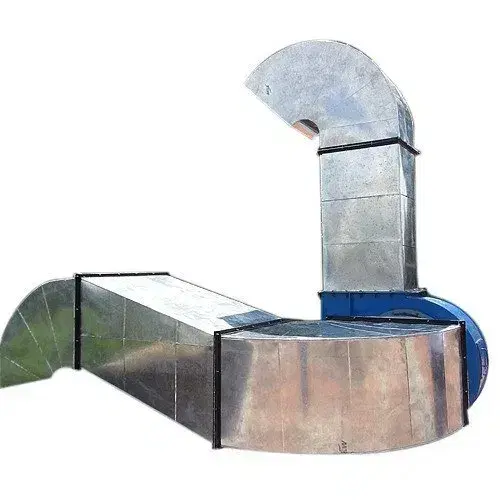
Exhaust Duct Work is the ducting system used to remove contaminated, stale, hot, smoky or odorous air from a building. It is also called exhaust ductwork, exhaust ducting, exhaust air ductwork, HVAC exhaust ductwork or exhaust ventilation ductwork.
In HVAC, exhaust ductwork means the duct system used to extract unwanted air from indoor spaces and discharge it outside the building. It is commonly used in kitchens, toilets, bathrooms, basements, laboratories, factories, warehouses, parking areas and commercial buildings.
The main purpose of exhaust ductwork is to maintain better indoor air quality, remove pollutants, control odor, reduce moisture, extract smoke and fumes, and support proper ventilation.
Exhaust ducts act as the pathway for removing unwanted air. They connect exhaust hoods, exhaust grilles, exhaust fans and discharge outlets to create controlled air movement.
Exhaust ductwork is used in commercial kitchens, restaurants, hotels, hospitals, offices, shopping malls, laboratories, factories, warehouses, paint booths, welding areas, parking ventilation systems, bathrooms, toilets, basements and industrial ventilation systems.
Exhaust ductwork works by collecting contaminated air from the source, moving it through ducts with the help of an exhaust fan or blower, and discharging it safely outside the building.
The system first collects air containing smoke, fumes, odor, moisture, heat, dust, grease vapor or chemical contaminants from the required area.
Exhaust hoods, kitchen hoods, exhaust grilles or local exhaust points capture the contaminated air before it spreads across the space.
The collected air travels through exhaust ducts such as GI exhaust duct, stainless steel exhaust duct, rectangular exhaust duct, round exhaust duct or spiral exhaust duct, depending on the project requirement.
The exhaust fan or exhaust blower creates negative pressure and pulls air through the ductwork system.
The exhaust air is discharged outside the building through an exhaust outlet, weather louver or discharge point placed at a suitable location.
Correct duct sizing, fan capacity, dampers and air balancing help maintain proper exhaust airflow and pressure control.
A complete exhaust ductwork system includes ducts, hoods, fans, grilles, dampers, supports, access doors and discharge components.
The exhaust air duct carries stale or contaminated air from the room to the discharge point.
An exhaust hood captures smoke, heat, grease vapor, fumes or contaminated air at the source.
The exhaust fan pulls air through the ductwork and discharges it outside.
An exhaust grille collects air from toilets, bathrooms, rooms, offices and other ventilation areas.
Duct elbows and bends change the direction of airflow where the duct route turns.
Transitions and reducers connect different duct sizes or shapes.
Volume control dampers help adjust exhaust airflow in different duct branches.
Fire dampers help control fire spread through duct openings where required in the system design.
Smoke dampers help control smoke movement during fire or smoke control operation.
Backdraft dampers help prevent outside air or exhaust air from flowing back into the building.
Access doors allow cleaning, inspection and maintenance inside the exhaust duct.
Flexible connectors reduce vibration transfer between exhaust fans and ductwork.
Supports and hangers hold exhaust ductwork securely in place.
Duct insulation or fire-rated wrapping may be used depending on temperature, condensation, acoustic or fire safety requirements.
Weather louvers protect exhaust openings from rain, debris and external weather conditions.
The exhaust air outlet is the final discharge point where unwanted air leaves the building.
Zenvent Engineering provides different types of exhaust ductwork based on application, material, airflow, safety and ventilation requirements.
General exhaust ductwork is used for removing stale air, odor, heat and indoor pollutants from commercial and residential spaces.
Kitchen exhaust ductwork removes smoke, heat, grease vapor and cooking odor from commercial kitchens and restaurant kitchens.
Grease exhaust ductwork is designed for kitchen hood exhaust systems where grease-laden air must be removed safely.
Toilet exhaust ductwork removes odor, moisture and stale air from toilets and washrooms.
Bathroom exhaust ductwork removes humidity, moisture and odor from bathrooms.
Smoke exhaust ductwork removes smoke from basements, parking areas, lobbies and fire safety systems.
Fume exhaust ductwork removes chemical fumes, vapors and harmful gases from specific process areas.
Laboratory exhaust ductwork removes chemical fumes, vapors and contaminated air from laboratory spaces.
Industrial exhaust ductwork is used in factories, manufacturing plants, workshops and production areas.
Dust extraction ductwork removes dust particles from machinery, cutting areas, manufacturing processes and industrial workspaces.
Paint booth exhaust ductwork removes paint fumes, overspray and vapors from paint booths.
Welding fume exhaust ductwork captures and removes welding fumes from work areas.
Parking ventilation ductwork removes vehicle exhaust gases and stale air from parking areas.
Fire rated exhaust ductwork is used where fire resistance, smoke control or kitchen exhaust safety requirements are important.
The right material for exhaust ductwork depends on the type of air being removed, temperature, moisture, grease, chemical exposure, fire safety and project specification.
GI exhaust ductwork is commonly used for general exhaust ventilation, toilet exhaust, basement ventilation and commercial exhaust systems.
Stainless steel exhaust ductwork is suitable for kitchen exhaust, laboratory ventilation, cleanroom ventilation and corrosive exhaust applications.
MS exhaust ductwork is used in selected industrial exhaust systems where heavy-duty construction is required.
Aluminium exhaust ductwork is lightweight and suitable for selected ventilation applications.
PVC or FRP exhaust ductwork may be used for chemical fumes or corrosive exhaust applications depending on project requirements.
Flexible exhaust duct is used for short connections, equipment connections or specific ventilation points.
Fire rated ductwork is used in smoke exhaust, kitchen exhaust and fire safety systems where fire resistance is required.
Material selection depends on exhaust air type, duct size, temperature, grease content, chemical exposure, fire rating requirement, durability, cleaning access and project cost.
Exhaust ductwork is used in many building types and industrial environments where air removal and ventilation are required.
Commercial exhaust ductwork removes stale air, odor, smoke and unwanted heat from different areas of commercial buildings.
Office exhaust ductwork supports toilet exhaust, pantry exhaust, basement ventilation and general air removal.
Hotel exhaust ductwork is used for kitchens, bathrooms, laundry areas, basements, service rooms and restaurants.
Restaurant exhaust ductwork removes cooking smoke, heat, grease vapor and odor from kitchen areas.
Commercial kitchen exhaust ductwork connects kitchen hoods to exhaust fans and discharge points for proper kitchen ventilation.
Hospital exhaust ductwork supports ventilation for toilets, isolation rooms, operation theatres, laboratories and service areas.
Laboratory exhaust ductwork removes fumes, vapors and chemical contaminants from work areas.
Shopping malls use exhaust ductwork for toilets, food courts, kitchens, parking areas and service zones.
Car parking exhaust ductwork removes vehicle fumes and supports basement ventilation.
Factory exhaust ductwork removes hot air, fumes, dust and process contaminants from production areas.
Warehouse exhaust ductwork helps remove stale air, heat and dust from large storage spaces.
Manufacturing plants use industrial exhaust ductwork for fumes, dust, heat and ventilation requirements.
Paint booth exhaust ductwork removes paint fumes, overspray and vapors from the booth area.
Welding exhaust ductwork removes welding fumes and supports safer work conditions.
Cleanroom exhaust ductwork is used where controlled air removal is required.
Pharmaceutical exhaust ductwork supports controlled ventilation, fume removal and process air extraction.
Proper exhaust ductwork improves ventilation, indoor air quality, safety and exhaust system performance.
Exhaust ductwork removes stale indoor air and supports continuous air exchange.
Odor exhaust duct systems help remove smells from kitchens, toilets, restaurants, basements and service areas.
Smoke exhaust ductwork and fume exhaust ductwork help remove harmful air contaminants from the source.
By removing pollutants, moisture and unwanted air, exhaust ductwork supports better indoor air quality.
Exhaust ventilation ductwork helps maintain proper airflow movement in buildings and industrial spaces.
Exhaust ductwork can help create negative pressure in specific areas such as toilets, kitchens, laboratories and isolation rooms.
Bathroom exhaust ductwork and toilet exhaust ductwork help reduce humidity, moisture and odor.
Industrial exhaust ductwork removes fumes, dust and vapors from work areas, supporting safer indoor conditions.
Kitchen exhaust ductwork with proper access, cleaning and fire safety planning helps reduce grease-related risks.
Correct duct sizing, sealing and airflow balancing help exhaust fans operate more effectively.
Exhaust ductwork design should be planned carefully to maintain airflow, pressure control, safety and reliable ventilation.
Exhaust airflow requirement depends on room type, process, heat load, contamination level and ventilation purpose.
CFM calculation helps determine the amount of air that must be exhausted from each space.
Exhaust duct size is calculated based on airflow, velocity, pressure drop and system layout.
Air velocity affects exhaust performance, noise level, grease movement, dust collection and pressure drop.
Static pressure represents resistance to airflow in the exhaust ductwork system.
Pressure drop occurs due to duct length, bends, fittings, dampers, filters, hoods and grilles.
Exhaust fan capacity must match duct size, airflow requirement and static pressure.
The duct route should be planned to reduce unnecessary bends, long runs and airflow restrictions.
Too many bends and transitions can increase pressure drop and reduce exhaust performance.
Noise control can be managed through correct duct sizing, air velocity control, acoustic lining and vibration isolation.
Kitchen exhaust ductwork, smoke exhaust ductwork and fire rated exhaust ductwork may require special fire safety planning.
Access doors should be planned for cleaning, inspection and maintenance, especially in kitchen exhaust and industrial exhaust systems.
The exhaust discharge location should be planned to avoid re-entry of contaminated air into the building.
Make-up air is important when exhaust airflow is high, especially in commercial kitchens, laboratories and industrial spaces.
Kitchen exhaust ductwork is used to remove smoke, heat, grease vapor and odor from cooking areas. It is important for restaurants, hotels, commercial kitchens, food courts and cloud kitchens.
The commercial kitchen exhaust hood captures smoke, heat and grease vapor from cooking equipment.
Grease exhaust ductwork carries grease-laden air from the kitchen hood to the exhaust fan and discharge point.
Stainless steel ductwork is commonly preferred for kitchen exhaust because it is durable and suitable for grease exhaust applications.
Kitchen exhaust ductwork should be planned with fire safety, proper clearance, access doors and cleaning requirements.
Access doors are required for inspection and cleaning of grease buildup inside the duct.
Grease duct cleaning helps reduce grease accumulation and supports safer kitchen operation.
The kitchen exhaust fan must be connected properly to maintain airflow and remove contaminated air effectively.
Commercial kitchens often need make-up air to replace exhausted air and maintain proper pressure balance.
Industrial exhaust ductwork removes fumes, dust, heat, vapors and process contaminants from industrial work areas.
Fume extraction ductwork captures fumes from chemical processes, welding, laboratories and industrial workstations.
Dust collection exhaust ductwork removes dust generated from cutting, grinding, manufacturing and production processes.
Welding exhaust ductwork captures welding fumes and removes them from the work area.
Paint booth exhaust ductwork removes paint fumes and overspray from painting areas.
Chemical exhaust ductwork removes chemical vapors and gases from laboratories and industrial processes.
Local exhaust ventilation ductwork captures contaminants close to the source before they spread into the workspace.
Industrial exhaust fan connection must be designed for the required airflow, static pressure and duct layout.
Industrial exhaust ductwork supports better workplace air quality by removing harmful fumes, dust and vapors.
Smoke exhaust ductwork is used in smoke control and fire safety systems for basements, lobbies, staircases, parking areas and commercial buildings.
Smoke extraction ducts remove smoke from specific areas during emergency conditions.
Fire rated ductwork helps maintain system performance during fire conditions where required.
Smoke exhaust fans remove smoke through fire-rated or smoke exhaust ductwork.
Smoke dampers help control smoke movement through ducts and building zones.
Smoke exhaust and pressurization systems may be used for staircases, lobbies and escape routes.
Basement smoke exhaust ductwork is used in parking areas, service areas and underground levels.
Smoke exhaust ductwork should be coordinated with fire alarm, dampers, smoke fans and building safety systems.
Zenvent Engineering provides professional exhaust ductwork installation for commercial, industrial and residential ventilation projects.
Our team checks the exhaust source, duct route, fan location, discharge point, site access and safety requirements.
HVAC drawings are reviewed to confirm duct size, duct material, route, fan connection, hood location, damper placement and discharge point.
Duct routes are measured and marked on site before fabrication and installation.
Exhaust duct fabrication includes cutting, bending, forming and assembling duct sections as per project requirements.
Duct supports and hangers are installed to hold the exhaust duct safely and correctly.
Fabricated duct sections are lifted, aligned and fixed in position as per layout.
Duct joints are sealed to reduce leakage and maintain exhaust performance.
Volume control dampers, backdraft dampers, fire dampers and smoke dampers are installed where required.
The exhaust fan or blower is connected to the ductwork with proper alignment and vibration control.
Exhaust hoods, grilles or intake points are connected to the duct system.
Access doors are installed for cleaning, inspection and maintenance.
Insulation, fire wrap or fire-rated duct treatment is provided where required by application and project specification.
Testing and commissioning confirm airflow, fan performance, leakage control, damper operation, noise level and exhaust discharge.
Exhaust duct cleaning is important for maintaining airflow, safety and system performance.
Kitchen exhaust duct cleaning removes grease, oil deposits, dust and cooking residue from the ductwork.
Grease removal helps reduce buildup inside kitchen hood exhaust ducts and grease exhaust systems.
Dust and debris removal improves airflow and reduces blockage in exhaust ducts.
Access doors allow cleaning teams to reach internal duct sections.
Exhaust fan cleaning improves fan performance and reduces vibration or imbalance.
Kitchen hood and filter cleaning supports better capture of smoke, heat and grease vapor.
Industrial exhaust duct cleaning removes dust, fumes residue and process buildup from duct systems.
Cleaning frequency depends on usage, grease level, dust load, process type and site conditions.
Testing and commissioning ensure that exhaust ductwork performs as designed.
Visual inspection checks duct alignment, supports, joints, access doors, dampers, fan connections and discharge points.
Duct leakage testing checks whether exhaust air is escaping from duct joints or seams.
Airflow measurement confirms actual exhaust air quantity at grilles, hoods and duct branches.
Static pressure testing checks resistance inside the duct system and confirms fan performance requirements.
Fan performance testing checks exhaust fan airflow, motor operation, vibration and discharge performance.
Dampers are adjusted to control and balance exhaust airflow.
Air balancing ensures each exhaust point receives the required airflow.
Noise and vibration checking helps identify loose supports, fan issues, high velocity or poor alignment.
Smoke testing or functional testing helps confirm proper air movement and exhaust direction.
A commissioning report records inspection findings, airflow readings, pressure values, balancing status and system performance.
Regular exhaust ductwork maintenance helps maintain airflow, safety and ventilation performance.
Leakage inspection helps identify damaged joints, loose seams and air loss.
Duct cleaning removes dust, grease, debris and contamination buildup.
Grease buildup inspection is important for kitchen exhaust ductwork and restaurant exhaust ductwork.
Dampers should be checked for proper opening, closing and airflow control.
Exhaust fan inspection checks motor operation, fan blade condition, vibration and airflow.
Access doors should be checked for sealing, condition and cleaning access.
Supports and hangers should be inspected for safety, alignment and duct stability.
Insulation and fire wrap should be checked for damage, gaps or loose sections.
Airflow testing helps detect blockages, leakage, fan issues or poor balancing.
Zenvent Engineering provides exhaust ductwork preventive maintenance and AMC service for commercial kitchens, hotels, restaurants, factories, hospitals, malls, laboratories and industrial facilities.
Exhaust ductwork problems can affect ventilation, safety, airflow and indoor air quality.
Poor airflow may happen due to wrong duct sizing, blocked ducts, fan issues, dirty grilles or high static pressure.
Duct leakage reduces exhaust performance and can cause air loss or odor spread.
Grease buildup in kitchen exhaust ducts can reduce airflow and create cleaning and fire safety concerns.
Dust accumulation can block airflow and affect exhaust system performance.
Bad odor return may happen due to backdraft, poor discharge location, leakage or missing backdraft damper.
High static pressure can be caused by undersized ducts, long duct runs, too many bends, clogged filters or blocked discharge.
Noisy ductwork may be caused by high air velocity, vibration, loose supports or poor fan connection.
Damaged insulation can cause heat gain, condensation, noise issues or fire rating concerns.
Loose duct supports can cause vibration, sagging and duct damage.
Blocked exhaust grilles reduce airflow and ventilation performance.
Fan vibration may happen due to imbalance, loose mounting, worn bearings or poor alignment.
Incorrect duct sizing can cause poor airflow, noise, high static pressure and low exhaust performance.
Poor discharge location or blocked outlet can cause exhaust air to return into the building.
Understanding the difference between exhaust ductwork and other duct systems helps select the right HVAC solution.
Exhaust ductwork removes air from a space, while supply ductwork delivers fresh or conditioned air into the space.
Return air ductwork brings indoor air back to HVAC equipment, while exhaust ductwork removes air completely from the building.
Fresh air ductwork brings outdoor air inside, while exhaust ductwork removes indoor air outside.
Smoke exhaust ductwork is a special exhaust system used for smoke control during fire conditions.
Kitchen exhaust ductwork removes grease vapor, smoke and heat, while general exhaust ductwork removes stale air, odor or moisture.
GI exhaust duct is commonly used for general exhaust, while stainless steel exhaust duct is preferred for kitchen exhaust, laboratory exhaust and corrosive exhaust applications.
Round exhaust ducts support smooth airflow, while rectangular exhaust ducts are often used where space coordination is required.
Exhaust ductwork cost depends on material, size, quantity, application, accessories and installation conditions.
GI exhaust duct, stainless steel exhaust duct, MS exhaust duct, aluminium exhaust duct, PVC duct and flexible exhaust duct have different cost ranges.
Duct gauge or thickness affects strength, durability and cost.
Larger duct sizes require more material and may increase fabrication cost.
Total duct quantity depends on building size, duct route, number of exhaust points and system layout.
Kitchen exhaust ductwork may cost more than general exhaust ductwork because of grease, cleaning and safety requirements.
Fire rated exhaust ductwork, smoke exhaust ductwork and kitchen exhaust systems may require additional fire-rated treatment.
Backdraft dampers, volume control dampers, fire dampers, smoke dampers and access doors affect total cost.
Fan type, fan location, flexible connectors and vibration control can affect installation scope.
Complex duct shapes, bends, transitions, reducers and site restrictions can increase fabrication effort.
High ceiling work, rooftop ducting, shaft work, scaffolding and difficult access can affect installation cost.
Leakage testing, airflow testing, static pressure testing and air balancing can affect project cost.
Cleaning, grease removal, leakage repair, insulation repair and AMC requirements affect long-term cost.
Zenvent Engineering provides complete exhaust ductwork services for commercial, industrial and residential ventilation projects.
We provide exhaust ductwork design based on airflow requirement, CFM calculation, duct size, pressure drop, fan capacity and discharge location.
Our exhaust duct fabrication service includes GI ductwork, stainless steel ductwork, MS ductwork, aluminium ductwork, duct fittings, elbows, reducers and transitions.
We provide exhaust duct installation for commercial buildings, hotels, restaurants, kitchens, hospitals, factories, warehouses, laboratories and malls.
We provide kitchen exhaust ductwork for restaurant kitchens, hotel kitchens, commercial kitchens and food service areas.
Our industrial exhaust ductwork services support factories, manufacturing plants, welding areas, paint booths, warehouses and process ventilation.
We provide smoke exhaust ductwork for basements, parking areas, lobbies and smoke control systems.
Our exhaust duct cleaning service removes dust, grease, debris and buildup from exhaust duct systems.
Leakage testing helps check duct sealing quality and exhaust performance.
Air balancing adjusts exhaust airflow at grilles, hoods and branches.
We repair duct leakage, damaged ducts, poor airflow, loose supports, insulation damage and access door issues.
Old, damaged or unsafe ductwork can be replaced with properly designed new exhaust ductwork.
Our commercial exhaust duct services are suitable for offices, malls, hotels, restaurants, hospitals, shops and commercial buildings.
Our industrial exhaust duct services are suitable for factories, warehouses, manufacturing plants, laboratories, paint booths and welding areas.
Zenvent Engineering provides exhaust ductwork AMC service for inspection, cleaning, leakage checking, airflow testing and preventive maintenance.
Zenvent Engineering delivers reliable exhaust ductwork solutions with proper design, fabrication, installation, cleaning and maintenance support.
Our team understands exhaust ductwork, ventilation ductwork, kitchen exhaust ductwork, industrial exhaust ductwork, smoke exhaust ductwork and air balancing.
We provide exhaust duct services for restaurants, hotels, hospitals, malls, factories, warehouses, laboratories, commercial kitchens and industrial facilities.
We focus on duct sizing, airflow, pressure drop, duct route, bends, dampers, access doors, discharge location and fan connection.
From design and fabrication to installation, cleaning, testing, repair, replacement and AMC, Zenvent Engineering provides complete support.
Our exhaust ductwork solutions are designed to remove unwanted air, improve ventilation, reduce odor, support safety and maintain long-term system performance.
Exhaust duct work is the ducting system used to remove stale air, smoke, fumes, odor, heat, dust or contaminated air from indoor spaces.