
01
Steam Generation from Boiler
Steam is generated in a boiler or steam generator. The boiler heats water and converts it into steam at the required pressure and temperature.
Zenvent Engineering provides professional Steam and Fluid Piping solutions for industrial plants, manufacturing facilities, chemical plants, pharmaceutical facilities, food and beverage plants, textile units, hospitals, hotels, commercial kitchens, laundry plants, boiler rooms, power plants, oil and gas facilities, HVAC systems and MEP projects.
Steam and fluid piping systems are essential for carrying steam, condensate, water, oil, chemical fluids, compressed air, glycol, thermal fluids and process utilities safely across a facility. A properly designed piping system helps improve process performance, reduce heat loss, control pressure drop, improve safety and support long-term plant operation.
Whether you need steam piping, fluid piping, industrial piping, process piping, boiler steam piping, condensate return piping, utility piping, compressed air piping, chemical fluid piping, cooling water piping, thermal fluid piping, fuel oil piping, pipe fabrication, piping installation, welding, insulation, pressure testing, hydro testing, flushing, commissioning, repair or AMC service, Zenvent Engineering provides complete steam and fluid piping services.
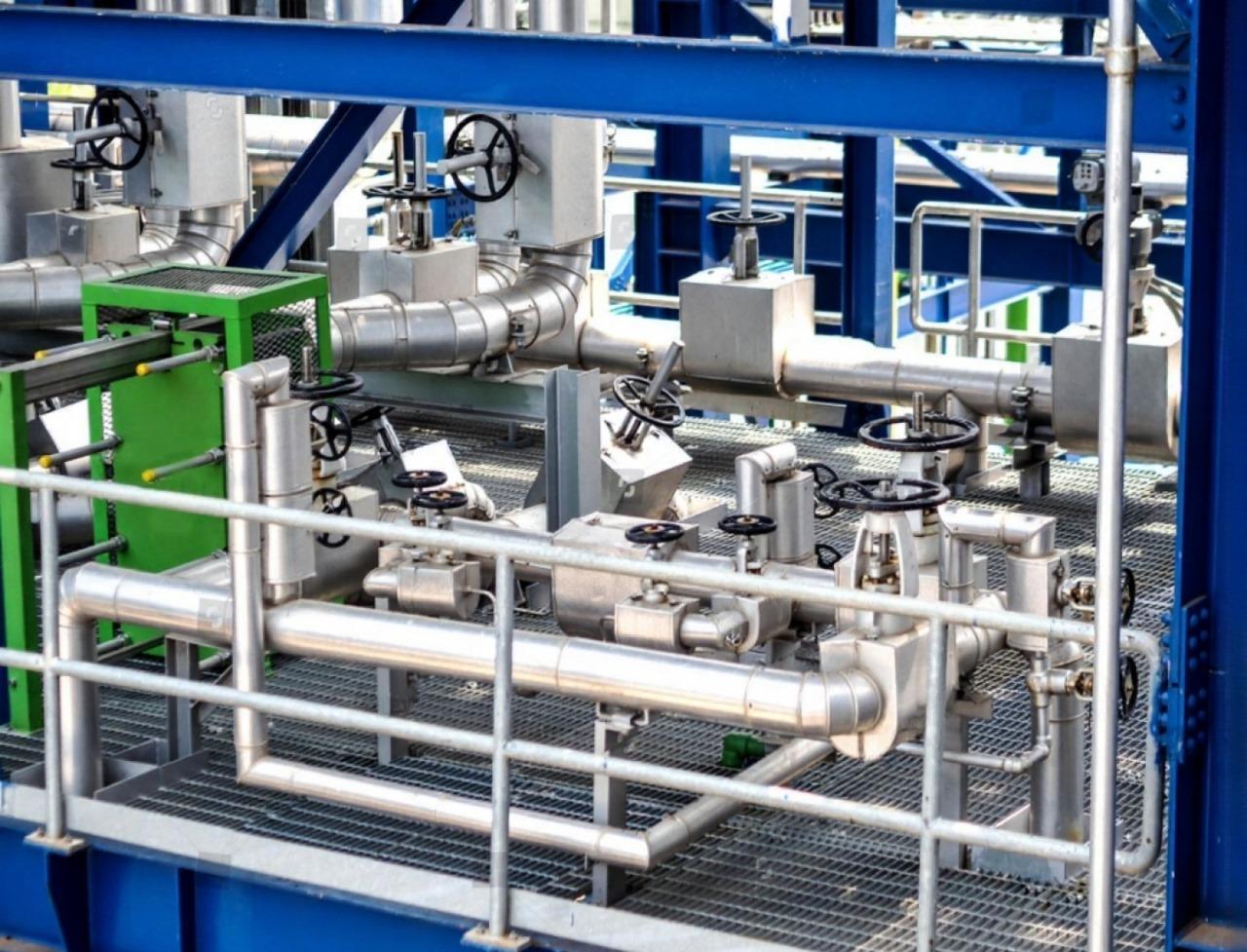
Steam and Fluid Piping refers to piping systems used to transport steam and different types of fluids from one point to another in industrial, commercial, HVAC and process applications. These systems are designed according to pressure, temperature, flow rate, fluid type, pipe material, safety requirements and operating conditions.
Steam piping is mainly used to carry steam from boilers to process equipment, heating systems, sterilization units, laundry equipment and HVAC systems. Fluid piping is used to carry water, chemicals, oils, compressed air, glycol, thermal fluids and other process fluids.
Steam piping is a pipe network used to carry steam from a boiler or steam generator to process equipment, heat exchangers, steam coils, sterilizers, laundry machines, commercial kitchens or industrial heating systems. It may include steam supply piping, steam header piping, steam trap piping, PRV station piping and condensate return piping.
Fluid piping is a pipe network used to carry liquids or gases such as water, oil, chemicals, compressed air, glycol, fuel oil, thermal fluid and process water. It is widely used in industrial utility piping, process fluid piping, chemical fluid piping, cooling water piping and plant utility piping.
The main purpose of steam and fluid piping systems is to safely transfer thermal energy, process fluids and utility services across a building or plant. These systems support:
Zenvent Engineering provides steam and fluid piping services for:
Steam and fluid piping systems work by generating, distributing, transferring and returning energy or fluids through a controlled pipe network. The system may include boilers, pumps, valves, headers, strainers, steam traps, expansion loops, pressure gauges, temperature gauges, flow meters and insulation.
Steam distribution piping carries thermal energy across facilities for process, sterilization and environmental control needs. Proper sizing is important for safe and reliable operation because poor sizing can cause noise, premature failure or unsafe operating conditions.
Steam is generated in a boiler or steam generator. The boiler heats water and converts it into steam at the required pressure and temperature.
Steam supply piping carries steam from the boiler to different process equipment, heating systems, steam coils, sterilizers, laundry equipment or plant utility points.
Steam transfers heat to the connected equipment or process. This heat can be used for process heating, sterilization, humidification, cooking, drying, laundry, HVAC heating or industrial production.
After steam transfers heat, it turns into condensate. Condensate return piping carries this hot condensate back to the boiler feed system or condensate recovery system.
Fluid piping systems transfer liquids or gases through pumps, pressure systems or gravity flow. The piping network is selected based on the fluid type, flow rate, pressure and temperature.
Valves, PRV stations, strainers, gauges, temperature indicators, flow meters and control systems help maintain proper pressure, temperature and flow in steam and fluid piping systems.
A steam and fluid piping system includes several components that help control flow, pressure, temperature, safety and reliability.
| Component | Function | Benefit |
|---|---|---|
| Steam Supply Pipes | Carry steam from boiler to equipment | Supports heating and process operation |
| Condensate Return Pipes | Return condensate to recovery system | Saves energy and water |
| Process Fluid Pipes | Carry water, oil, chemical or utility fluids | Supports plant operation |
| Pipe Fittings | Change direction or connect lines | Supports proper routing |
| Steam Headers | Distribute steam to multiple lines | Improves steam distribution |
| Valves | Control, isolate or regulate flow | Supports operation and maintenance |
| Steam Traps | Remove condensate from steam lines | Improves steam quality |
| Strainers | Remove dirt and particles | Protects valves and equipment |
| Pressure Reducing Valves | Reduce steam pressure | Supports safe pressure control |
| Safety Valves | Protect system from overpressure | Improves safety |
| Expansion Loops | Absorb thermal expansion | Reduces pipe stress |
| Expansion Joints | Handle movement and expansion | Protects piping system |
| Pipe Supports and Hangers | Support pipe weight | Prevents sagging and vibration |
| Pressure Gauges | Show system pressure | Supports monitoring |
| Temperature Gauges | Show operating temperature | Helps performance checking |
| Flow Meters | Measure fluid or steam flow | Supports commissioning and control |
| Pipe Insulation | Reduces heat loss and protects personnel | Saves energy and improves safety |
Zenvent Engineering supports different types of steam and fluid piping systems based on pressure, temperature, fluid type and industrial application.
| Type of Piping System | Best Suitable For | Key Features |
|---|---|---|
| Low Pressure Steam Piping | Laundry, kitchen and light heating systems | Lower pressure steam distribution |
| Medium Pressure Steam Piping | Process heating and industrial utilities | Balanced pressure and capacity |
| High Pressure Steam Piping | Boiler plants and industrial processes | Heavy-duty pressure-rated piping |
| Saturated Steam Piping | Heating and process applications | Common steam distribution system |
| Superheated Steam Piping | Power and special industrial applications | Higher temperature steam service |
| Condensate Return Piping | Steam systems and boiler plants | Returns hot condensate |
| Process Fluid Piping | Industrial process lines | Carries process fluids |
| Chemical Fluid Piping | Chemical plants and transfer systems | Requires material compatibility |
| Utility Fluid Piping | Plant utility services | Supports water, air, oil and service fluids |
| Compressed Air Piping | Factories and manufacturing plants | Carries compressed air |
| Cooling Water Piping | HVAC and industrial cooling | Transfers cooling water |
| Process Water Piping | Industrial water distribution | Supports production processes |
| Thermal Fluid Piping | Heat transfer systems | Carries heat transfer oil or fluid |
| Glycol Piping | Cooling and heating systems | Supports low-temperature applications |
| Fuel Oil Piping | Boiler and fuel systems | Carries fuel oil safely |
Steam and fluid piping material selection depends on pressure, temperature, fluid type, corrosion risk, chemical compatibility, pipe schedule, safety requirement and project specification.
| Pipe Material | Common Use | Key Features |
|---|---|---|
| Mild Steel Pipes | Steam, water and utility piping | Strong and cost-effective |
| Carbon Steel Pipes | Steam and industrial process piping | Suitable for pressure and temperature service |
| Stainless Steel Pipes | Process, chemical and food applications | Corrosion resistant and hygienic |
| Alloy Steel Pipes | High temperature and high pressure steam | Suitable for demanding applications |
| Galvanized Iron Pipes | Selected utility fluid systems | Zinc coating helps corrosion resistance |
| Copper Pipes | Selected fluid and HVAC applications | Good heat transfer and corrosion resistance |
| HDPE Pipes | Water and selected utility piping | Lightweight and corrosion resistant |
| CPVC / UPVC Pipes | Water and chemical-compatible services | Lightweight thermoplastic piping |
| PPR Pipes | Hot and cold water applications | Heat fusion jointing and corrosion resistance |
MS steam piping and MS fluid piping are commonly used in industrial utility systems, boiler rooms and plant piping because of strength and fabrication flexibility.
Carbon steel steam piping and carbon steel fluid piping are used for industrial steam, condensate, process water, heating fluid and utility applications.
SS process piping and stainless steel fluid piping are suitable for pharmaceutical, food, chemical and hygiene-sensitive applications.
Alloy steel steam piping is used where high temperature, high pressure and demanding service conditions are present.
GI fluid piping may be used for selected utility services based on water quality, pressure and application.
Copper pipes are used in selected HVAC, fluid and heating applications where corrosion resistance and heat transfer are important.
HDPE pipes are used for selected water transfer, underground utility and low-pressure fluid applications.
CPVC and UPVC pipes are selected for compatible water, chemical and utility services where thermoplastic piping is suitable.
Material selection depends on steam pressure, fluid pressure, temperature rating, fluid compatibility, corrosion resistance, pipe schedule, insulation requirement, welding method, site condition and maintenance needs.
Specifications can be customized based on pressure rating, temperature, pipe schedule, material, flow rate, insulation, safety valves, supports, welding and commissioning requirements.
| Specification | Details |
|---|---|
| Service Type | Industrial steam piping |
| Suitable For | Manufacturing plants, textile units, chemical plants and process heating |
| Pipe Material | MS, carbon steel or alloy steel as per pressure and temperature |
| Steam Type | Low pressure, medium pressure or high pressure steam |
| Accessories | Steam traps, strainers, PRV station, safety valves and gauges |
| Insulation | Steam pipe insulation with aluminium cladding if required |
| Testing | Pressure testing, hydro testing and leak testing |
| Application Benefit | Reliable steam distribution for process use |
| Service Support | Design, fabrication, installation, commissioning and AMC |
| Specification | Details |
|---|---|
| Service Type | Boiler steam piping |
| Suitable For | Boiler rooms, steam plants and industrial facilities |
| Connected Equipment | Boiler, steam header, PRV station and steam users |
| Pipe Material | Carbon steel, MS or alloy steel |
| Pipe Schedule | Selected based on pressure and temperature |
| Accessories | Steam header, safety valve, pressure gauge and strainer |
| Insulation | High-temperature insulation |
| Testing | Hydro testing, steam blowing and commissioning |
| Service Support | Boiler piping system installation and maintenance |
| Specification | Details |
|---|---|
| Service Type | Condensate return piping |
| Suitable For | Steam systems and condensate recovery |
| Fluid Type | Hot condensate |
| Pipe Material | Carbon steel, stainless steel or project-specific material |
| Accessories | Steam traps, check valves, strainers and condensate pumps |
| Application Benefit | Recovers heat and reduces water wastage |
| Insulation | Recommended for hot condensate piping |
| Service Support | Installation, leak repair and maintenance |
| Specification | Details |
|---|---|
| Service Type | Process fluid piping |
| Suitable For | Chemical, pharma, food, manufacturing and process industries |
| Fluid Type | Water, chemicals, oil, glycol or process fluid |
| Pipe Material | SS, carbon steel, MS, HDPE, CPVC or compatible material |
| Design Basis | Flow rate, pressure, temperature and fluid compatibility |
| Accessories | Valves, strainers, flow meters and gauges |
| Testing | Hydro testing, leak testing and flushing |
| Service Support | Fabrication, installation, testing and repair |
| Specification | Details |
|---|---|
| Service Type | Chemical fluid piping |
| Suitable For | Chemical plants, pharma and industrial transfer systems |
| Pipe Material | Stainless steel, CPVC, UPVC, HDPE or compatible material |
| Selection Basis | Chemical resistance, pressure and temperature |
| Accessories | Chemical-resistant valves, fittings and supports |
| Testing | Leak testing and pressure testing |
| Application Benefit | Safe chemical transfer |
| Service Support | Material selection, installation and maintenance |
| Specification | Details |
|---|---|
| Service Type | Compressed air piping |
| Suitable For | Factories, workshops and manufacturing plants |
| Pipe Material | MS, GI, aluminium, stainless steel or project-specific pipe |
| Pressure Rating | Selected as per compressor pressure |
| Accessories | Valves, filters, drains and pressure gauges |
| Application Benefit | Reliable utility air supply |
| Testing | Pressure testing and leak testing |
| Service Support | Installation, repair and maintenance |
| Specification | Details |
|---|---|
| Service Type | Thermal fluid piping |
| Suitable For | Heat transfer systems and industrial heating |
| Fluid Type | Thermal oil or heating fluid |
| Pipe Material | Carbon steel, alloy steel or project-specific material |
| Temperature Range | Selected as per heat transfer requirement |
| Insulation | High-temperature insulation |
| Application Benefit | Efficient heat transfer for process systems |
| Service Support | Fabrication, installation and AMC |
| Specification | Details |
|---|---|
| Service Type | Glycol piping system |
| Suitable For | HVAC, process cooling and low-temperature systems |
| Fluid Type | Glycol-water solution |
| Pipe Material | MS, carbon steel, stainless steel or compatible material |
| Accessories | Pumps, valves, strainers and gauges |
| Insulation | Required for low-temperature applications |
| Application Benefit | Freeze protection and cooling support |
| Service Support | Installation, flushing and maintenance |
| Specification | Details |
|---|---|
| Service Type | Fuel oil piping |
| Suitable For | Boiler fuel systems and industrial heating plants |
| Fluid Type | Fuel oil |
| Pipe Material | Carbon steel, MS or project-specific material |
| Accessories | Valves, filters, strainers and safety components |
| Installation Focus | Leak-free jointing and safe routing |
| Testing | Pressure testing and leak testing |
| Service Support | Installation, repair and preventive maintenance |
Industrial plants use steam and fluid piping for utility distribution, process heating, chemical transfer, cooling water, compressed air and production support.
Manufacturing facilities require process piping, plant utility piping and mechanical piping for steam, water, oil, compressed air and other fluids.
Chemical plants need material-compatible fluid piping for chemical transfer, process fluids and utility systems.
Pharmaceutical facilities require clean, reliable and properly tested process piping, steam piping and utility piping systems.
Food and beverage plants use steam piping for process heating, cleaning and sterilization, along with fluid piping for water and process liquids.
The textile industry uses steam piping for heating, washing, drying and process support.
Hospitals use steam piping for sterilization, laundry, kitchen, humidification and hot utility services.
Hotels use steam and fluid piping for kitchens, laundry, heating, hot water systems and utility services.
Commercial kitchens may use steam piping for cooking, heating and process equipment depending on the kitchen system design.
Laundry plants use steam piping for washing, drying, ironing and process heating.
Boiler rooms require steam piping, condensate return piping, boiler piping systems, PRV station piping and safety valve piping.
Power plants use high pressure steam piping, condensate piping, cooling water piping and utility piping systems.
Oil and gas facilities need fluid piping for oil transfer, utility lines, process fluids and fuel systems.
HVAC and MEP projects use steam piping, hot water piping, chilled water piping, condensate piping, compressed air piping and other utility piping systems.
Correct piping design ensures steam and fluids reach equipment with the required pressure, temperature and flow rate.
Reliable steam and fluid delivery improves heating, sterilization, cooling, chemical transfer and production performance.
Steam pipe insulation and thermal insulation reduce heat loss from hot piping systems.
Quality welding, proper jointing, pressure testing and commissioning reduce leakage risk.
Correct pressure rating, safety valves, expansion design and insulation improve operating safety.
Condensate recovery piping returns hot condensate, helping save energy and water.
Proper pipe sizing and routing reduce pressure drop and improve system efficiency.
Correct steam and fluid flow supports stable temperature control in process and HVAC systems.
Good material selection, corrosion control and preventive maintenance help extend piping system life.
Properly installed piping reduces breakdowns, leakage, vibration and repeated repairs.
Steam piping design must consider pressure, temperature, flow rate, condensate removal, thermal expansion and safety.
| Design Factor | Why It Matters |
|---|---|
| Steam Pressure | Decides pipe schedule, valve rating and safety requirement |
| Steam Temperature | Affects material selection and insulation |
| Steam Flow Rate | Helps calculate pipe size |
| Pipe Sizing | Controls velocity and pressure drop |
| Pipe Schedule | Ensures pressure and temperature strength |
| Steam Velocity | Prevents noise, erosion and pressure loss |
| Pressure Drop | Affects steam delivery to equipment |
| Condensate Drainage | Prevents water hammer and poor performance |
| Pipe Slope | Helps condensate flow toward drain points |
| Thermal Expansion | Prevents pipe stress and damage |
| Steam Trap Placement | Removes condensate from steam lines |
| Insulation Requirement | Reduces heat loss and improves safety |
| Safety Code Compliance | Supports safe installation and operation |
Process piping design commonly considers fluid characteristics such as viscosity and temperature, flow rate, pressure drop and maintenance accessibility.
| Design Factor | Why It Matters |
|---|---|
| Type of Fluid | Determines material compatibility |
| Fluid Temperature | Affects pipe material and insulation |
| Fluid Pressure | Decides pipe rating and jointing method |
| Flow Rate | Helps select pipe diameter and pump capacity |
| Viscosity | Affects pressure drop and pump selection |
| Corrosion Resistance | Protects pipe life |
| Pipe Material Compatibility | Prevents chemical attack and failure |
| Pipe Diameter | Controls velocity and pressure drop |
| Pressure Drop | Affects pump head and operating cost |
| Pump Head Requirement | Ensures proper fluid transfer |
| Valve Selection | Supports isolation, control and safety |
| Maintenance Accessibility | Makes inspection and repair easier |
Zenvent Engineering provides steam and fluid piping installation for industrial plants, boiler systems, process piping, HVAC systems and utility piping projects.
Pipe cutting and fabrication should follow approved drawings, site measurements, pipe schedule and material requirements.
Piping welding, threading or jointing method depends on pipe material, pressure rating, temperature and service type.
Steam pipe supports, pipe hangers and supports for fluid piping prevent sagging, vibration and pipe stress.
Steam trap station piping helps remove condensate from steam lines and equipment for better system performance.
Steam expansion loops and expansion joints help absorb thermal movement and protect the piping system.
Steam and fluid piping may connect to boilers, heat exchangers, process machines, tanks, pumps, headers, coils and plant utilities.
Steam piping insulation is important because steam supply lines stay hot even during low-load conditions, and uninsulated distribution piping can create substantial energy losses.
Steam pipe insulation reduces heat loss, improves energy efficiency and protects personnel from hot pipe surfaces.
Insulated steam piping helps maintain steam temperature and reduce energy wastage.
Steam pipes operate at high temperatures. Insulation reduces the risk of accidental burns.
Proper insulation helps the boiler system operate more efficiently by reducing heat loss in steam distribution.
Insulation helps reduce unwanted steam condensation inside piping and improves steam quality.
Common steam pipe insulation materials include rockwool, mineral wool, calcium silicate, fiberglass and high-temperature insulation systems.
Steam pipe insulation with aluminium cladding or jacketing protects insulation from mechanical damage, moisture and weather exposure.
Steam pipe insulation thickness depends on pipe size, steam temperature, ambient condition, personnel protection and energy saving requirement.
Indoor steam piping needs heat loss reduction and safety protection, while outdoor steam piping may need insulation with weatherproof cladding.
Testing and commissioning confirm that the steam and fluid piping system is safe, leak-free, clean and ready for operation.
Visual inspection checks pipe routing, supports, slope, valve placement, weld quality, insulation and equipment connections.
Weld inspection checks joint quality and helps reduce leakage risk in welded piping systems.
Piping pressure testing confirms pipe strength and checks for leakage before operation.
Hydro testing uses water pressure to test pipework and verify joint integrity.
Pneumatic testing may be used for selected systems where water testing is not suitable.
Leak testing helps identify weak joints, damaged fittings or faulty valves before commissioning.
Piping flushing removes dirt, welding particles, debris and installation residue.
Chemical cleaning may be used for selected fluid piping systems to remove scale, oil, rust or contamination.
Steam blowing is used in steam piping systems to remove debris and prepare the system for operation.
Air venting removes trapped air from fluid piping networks and helps improve flow.
Flow balancing ensures the required flow reaches each branch, process line or connected equipment.
The final commissioning report confirms testing, cleaning, balancing and system readiness.
Regular steam and fluid piping maintenance helps prevent leakage, corrosion, insulation damage, trap failure, water hammer, vibration and process interruptions.
| Maintenance Activity | Purpose |
|---|---|
| Leakage Inspection | Identifies steam or fluid leakage early |
| Insulation Inspection | Reduces heat loss and safety risk |
| Valve Checking | Ensures proper isolation and control |
| Strainer Cleaning | Prevents blockage and pressure drop |
| Steam Trap Checking | Removes condensate effectively |
| Condensate Line Inspection | Maintains condensate recovery |
| Pipe Support Inspection | Prevents sagging and vibration |
| Expansion Joint Inspection | Checks thermal movement control |
| Corrosion Monitoring | Extends piping life |
| Pressure Monitoring | Confirms operating pressure |
| Temperature Monitoring | Confirms operating temperature |
| Preventive Maintenance Schedule | Reduces breakdown risk |
Steam leakage and fluid leakage should be repaired quickly to prevent energy loss, safety issues and process disruption.
Damaged insulation should be repaired to reduce heat loss and maintain personnel protection.
Steam traps should be inspected regularly to ensure proper condensate removal and steam efficiency.
Strainers should be cleaned to remove dirt and protect valves, traps and process equipment.
Condensate return piping should be checked for blockage, leakage and proper slope.
Corrosion monitoring helps prevent pipe thinning, leakage and premature failure.
| Problem | Possible Reason | Solution |
|---|---|---|
| Steam leakage | Poor weld, valve issue or damaged pipe | Leak repair and pressure testing |
| Fluid leakage | Joint failure, corrosion or damaged fitting | Leakage repair and system checking |
| Water hammer | Condensate accumulation or poor trap placement | Steam trap checking and condensate drainage correction |
| Pipe corrosion | Poor material selection or fluid condition | Corrosion control and pipe replacement |
| Insulation damage | Moisture, aging or mechanical damage | Insulation repair and cladding |
| High pressure drop | Undersized pipe or blocked strainer | Pipe sizing review and strainer cleaning |
| Condensate accumulation | Poor slope or failed steam trap | Trap maintenance and piping correction |
| Steam trap failure | Dirt, wear or wrong selection | Steam trap repair or replacement |
| Valve malfunction | Internal damage or actuator issue | Valve repair or replacement |
| Pipe vibration | Poor supports or flow disturbance | Support correction and vibration control |
| Thermal expansion stress | No expansion loop or joint | Expansion design correction |
| Blockage in fluid line | Scale, debris or contamination | Flushing and cleaning |
| Uneven flow distribution | Poor balancing or wrong pipe sizing | Flow balancing and design review |
Steam piping carries steam at higher temperature and pressure for process or heating applications. Hot water piping carries heated water for domestic hot water or hydronic heating.
Steam piping carries steam from the boiler to equipment. Condensate piping carries condensed steam back to the recovery system or boiler feed system.
Fluid piping is a broad term for carrying fluids. Process piping is used for production or process-related fluid transfer in industrial facilities.
Utility piping carries support services such as water, air, steam, fuel or glycol. Fluid piping can include both utility and process fluid transfer.
Steam piping carries steam for heating or process use. Chilled water piping carries chilled water for cooling applications.
Steam piping carries steam. Refrigerant piping carries refrigerant gas or liquid in air conditioning and refrigeration systems.
Process piping is used for industrial production and utility services. Plumbing piping is mainly used for water supply, sanitary drainage and domestic building services.
The steam and fluid piping cost depends on pipe material, pipe diameter, pipe schedule, pressure rating, temperature requirement, pipe length, valve quantity, welding, insulation and testing scope.
| Cost Factor | Impact on Cost |
|---|---|
| Pipe Material | MS, carbon steel, stainless steel and alloy steel have different costs |
| Pipe Diameter | Larger pipe sizes increase material and labor cost |
| Pipe Schedule | Higher schedule increases pipe thickness and cost |
| Steam Pressure or Fluid Pressure | Higher pressure requires stronger materials and fittings |
| Temperature Requirement | High temperature service needs suitable material and insulation |
| Total Pipe Length | Longer routing increases project cost |
| Valve and Fitting Quantity | More valves, traps, strainers and fittings increase cost |
| Welding and Fabrication Work | Complex fabrication increases labor and time |
| Insulation and Cladding | Required for steam and hot service lines |
| Site Height and Accessibility | Difficult access increases installation effort |
| Testing and Commissioning Scope | Hydro testing, flushing and commissioning affect cost |
| Maintenance Requirement | Access and long-term service planning affect total value |
Steam piping cost per meter depends on pipe size, pipe schedule, material, insulation, fittings, supports, welding and site condition.
Steam piping price in India varies based on project size, pressure rating, pipe material, insulation, labor and testing scope.
Fluid piping installation cost depends on fluid type, pipe material, pipe length, fittings, pump connection, support system and testing requirement.
Steam and fluid piping project cost depends on design complexity, material specification, pressure rating, temperature, site condition and commissioning scope.
Zenvent Engineering provides complete steam and fluid piping services for industrial, commercial, HVAC, MEP and process applications.
We support steam piping layout, pipe sizing, pressure drop planning, steam trap placement, expansion loop planning and safety coordination.
We support fluid piping design for water, oil, chemical, glycol, compressed air, thermal fluid and process fluid applications.
Our steam piping installation service includes pipe fabrication, welding, support fixing, valve installation, trap station installation, insulation and testing.
We provide fluid piping installation for industrial utilities, process lines, water systems, oil systems, chemical lines and HVAC services.
We provide process piping fabrication and installation based on approved layout, pipe material, pressure rating and process requirement.
We provide steam pipe insulation, heat loss reduction, aluminium cladding, jacketing and insulation repair.
We provide fluid pipe pressure testing, hydro testing, leak testing, flushing and commissioning.
We provide steam piping pressure testing, hydro testing and leak testing before commissioning.
We support steam blowing, trap checking, air venting, heat-up checking and final commissioning.
We support flushing, flow testing, pressure checking, leak testing and final commissioning for fluid piping systems.
We provide preventive maintenance, leak inspection, valve checking, trap checking, strainer cleaning, insulation checking and corrosion monitoring.
We repair steam leakage, fluid leakage, damaged insulation, valve problems, pipe corrosion, vibration issues and flow problems.
We provide steam trap station installation for proper condensate removal and steam system performance.
We provide condensate return piping and condensate recovery piping to improve boiler system efficiency.
Zenvent Engineering offers AMC service for steam and fluid piping systems to support regular inspection, safety and long-term reliability.
Zenvent Engineering delivers reliable steam and fluid piping solutions for industrial plants, process facilities, commercial projects, HVAC systems and MEP utility networks. We focus on proper design, correct material selection, quality fabrication, safe installation, accurate testing and long-term maintenance support.
Steam and fluid piping refers to piping systems used to carry steam, condensate, water, oil, chemicals, compressed air, glycol, thermal fluids and other process utilities.