
01
Collection of Exhaust Air or Fumes
FRP ducts collect chemical fumes, acid vapors, solvent exhaust, process exhaust, laboratory fumes or industrial exhaust from machines, hoods, tanks or process areas.
Zenvent Engineering provides professional FRP Duct Work solutions for industrial ventilation, chemical exhaust systems, laboratory exhaust, scrubber ductwork, wastewater treatment plants, pharmaceutical facilities, manufacturing plants, cleanrooms, semiconductor facilities, plating industries, battery manufacturing plants, fertilizer plants and pollution control systems.
FRP ductwork is also known as fiberglass ductwork, fiberglass reinforced plastic ductwork, GRP ductwork, corrosion resistant ductwork and chemical resistant ductwork. It is widely used in harsh environments where metal ductwork may corrode due to acid fumes, chemical vapors, solvent exhaust, corrosive gases or wet industrial exhaust.
Our services include FRP ductwork design, FRP duct fabrication, FRP duct supply, FRP duct installation, FRP exhaust ductwork, FRP chemical exhaust ductwork, FRP scrubber ductwork, FRP laboratory exhaust ductwork, leakage testing, maintenance, repair, replacement and AMC service.
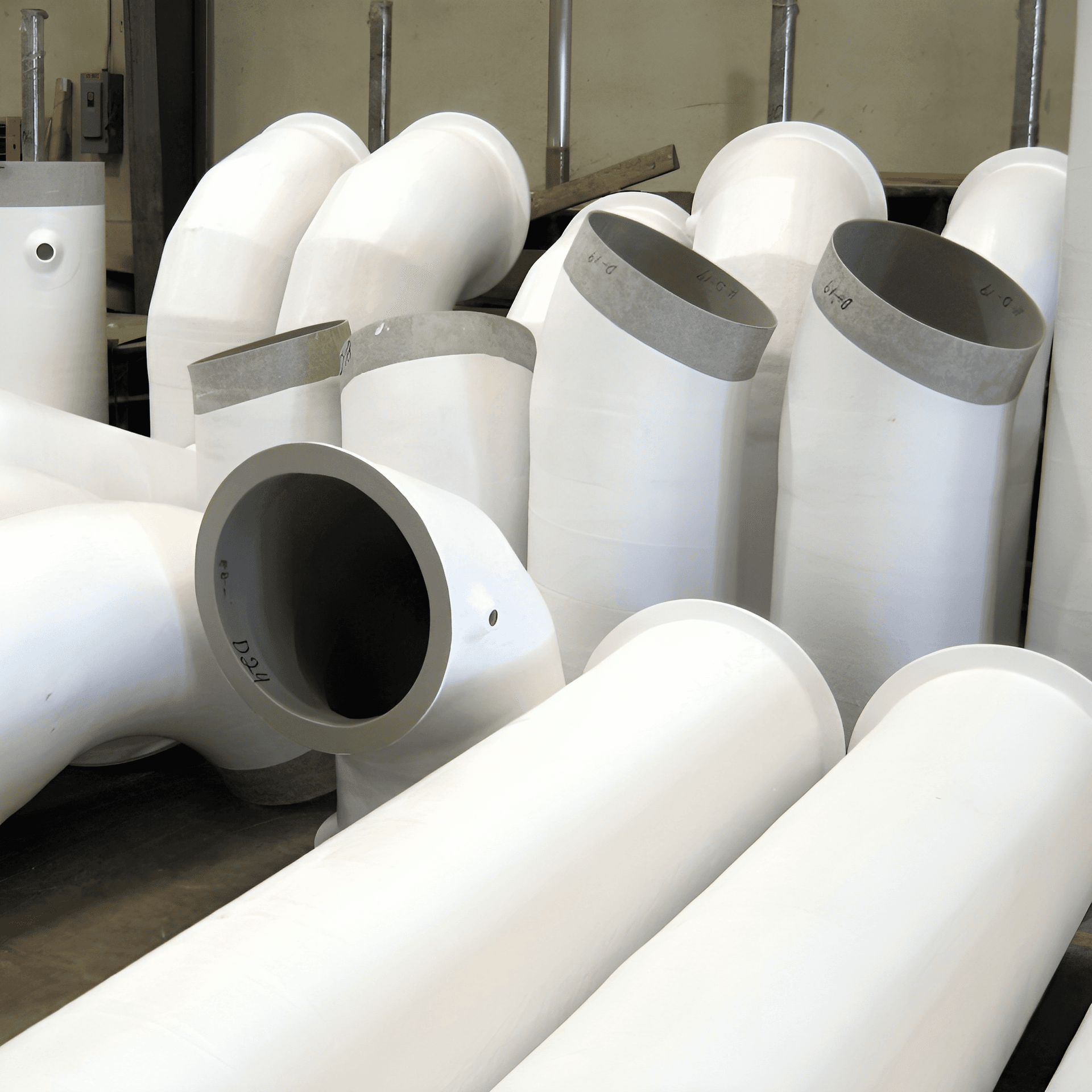
FRP Duct Work is a ducting system made from fiberglass reinforced plastic. It is used to carry exhaust air, fumes, vapors, corrosive gases and process air in industrial and chemical environments.
FRP ductwork means a fiberglass reinforced plastic ducting system designed for ventilation, exhaust and fume extraction applications. It is commonly used where corrosion resistance is required.
The full form of FRP is Fiberglass Reinforced Plastic. It is made using glass fiber reinforcement and resin to create a strong, lightweight and corrosion resistant duct material.
The main purpose of FRP ductwork is to safely move corrosive fumes, chemical vapors, acid exhaust, industrial exhaust and contaminated air from the source to an exhaust fan, scrubber or chimney stack.
FRP ductwork is used in chemical plants, pharmaceutical facilities, laboratories, wastewater treatment plants, sewage treatment plants, scrubber systems, fume extraction systems, industrial exhaust systems and pollution control systems.
FRP ductwork offers better corrosion resistance for harsh chemical exhaust applications, while metal ductwork such as GI, MS or stainless steel is commonly used for general HVAC and ventilation systems.
FRP ductwork works by collecting exhaust air or fumes from the source and moving them through corrosion resistant ducts toward exhaust fans, scrubbers or safe discharge points.
FRP ducts collect chemical fumes, acid vapors, solvent exhaust, process exhaust, laboratory fumes or industrial exhaust from machines, hoods, tanks or process areas.
The exhaust air moves through FRP duct sections, elbows, reducers, transitions and branch connections based on the duct layout.
FRP ducts are commonly connected to exhaust fans, scrubbers, fume hoods, chimney stacks or pollution control equipment.
FRP ductwork is suitable for corrosive fume handling because the resin and fiberglass construction can resist chemical attack when selected properly.
The ductwork transfers fumes or exhaust air to the final treatment or discharge point, such as a wet scrubber, exhaust fan or stack.
Correct FRP duct sizing, pressure drop calculation, support spacing, sealing and fan selection help maintain proper airflow and static pressure.
A complete FRP ductwork system includes duct sections, fittings, supports, joints, dampers, access doors and equipment connections.
FRP duct sections form the main air path for exhaust or ventilation flow.
FRP elbows and bends are used where the duct route changes direction.
FRP reducers connect duct sections of different sizes.
FRP transitions connect different duct shapes, such as round to rectangular duct sections.
FRP branch connections divide or combine airflow from different exhaust points.
FRP flanges are used to join duct sections, equipment and fittings securely.
FRP dampers help control airflow in the ductwork system.
FRP access doors allow inspection, cleaning and maintenance inside the duct.
Expansion joints help absorb thermal movement, vibration and system expansion.
Supports and hangers hold FRP ducts safely in position and prevent sagging.
Gaskets and sealants help prevent leakage at duct joints and flange connections.
FRP ducts connect to exhaust fans for air movement and discharge.
FRP ducts connect to scrubbers for chemical fume treatment and pollution control.
FRP ductwork may connect to a chimney or stack for final exhaust discharge.
Zenvent Engineering provides different types of FRP ductwork based on application, airflow, shape, chemical exposure and project requirement.
Round FRP ductwork is used for smooth airflow and industrial ventilation applications.
Rectangular FRP ductwork is used where space coordination or specific layout requirements are needed.
Spiral FRP ductwork can be used in selected ventilation and exhaust applications based on project design.
FRP exhaust ductwork removes contaminated or corrosive exhaust air from industrial areas.
FRP chemical exhaust ductwork is used for acid fumes, chemical vapors and corrosive gases.
FRP fume exhaust ductwork captures and transfers harmful fumes from work areas.
FRP laboratory exhaust ductwork is used for fume hoods, lab ventilation and chemical vapor removal.
FRP scrubber ductwork connects process exhaust to wet scrubbers or fume treatment systems.
FRP process exhaust ductwork is used for industrial processes that release fumes, vapors or corrosive air.
Industrial FRP ductwork is used in factories, chemical plants, plating industries and manufacturing facilities.
Single wall FRP duct is used where insulation or double wall construction is not required.
Double wall FRP duct is used where additional protection, insulation or special construction is needed.
Insulated FRP ductwork is used where temperature control, condensation control or heat protection is required.
FRP duct material selection is important for chemical resistance, strength, temperature handling and long-term performance.
Fiberglass reinforced plastic is the main material used for FRP ductwork. It combines glass fiber strength with resin-based corrosion resistance.
Glass fiber reinforcement provides strength and structural support to the duct.
Polyester resin is used in many FRP applications where standard chemical resistance is suitable.
Vinyl ester resin is used where higher chemical resistance is required for acid fumes and corrosive exhaust.
Epoxy resin may be used in selected FRP duct applications where specific mechanical or chemical resistance is needed.
Chemical resistant lining helps protect the inner duct surface from corrosive fumes and vapors.
UV resistant coating helps protect outdoor FRP ducts from sunlight exposure.
Fire retardant resin can be selected where fire safety performance is required.
Anti-corrosion coating adds extra protection for harsh industrial environments.
Material selection depends on chemical type, exhaust temperature, airflow, pressure, outdoor exposure, fire requirement, duct size and maintenance needs.
FRP ductwork is widely used in industries where chemical resistance and corrosion protection are important.
FRP ductwork for chemical plants handles acid fumes, chemical vapors and corrosive exhaust.
FRP ductwork for pharmaceutical industry supports process exhaust, lab ventilation and controlled air removal.
FRP laboratory exhaust ductwork is used for fume hoods, chemical vapor exhaust and lab ventilation systems.
FRP ductwork for wastewater treatment plants handles corrosive gases, odor exhaust and wet exhaust conditions.
FRP ductwork for sewage treatment plants supports ventilation and odor control systems.
FRP scrubber ductwork connects process exhaust to wet scrubbers and pollution control equipment.
FRP fume exhaust ductwork removes fumes from chemical tanks, process areas and workstations.
Industrial FRP ductwork is suitable for corrosive exhaust, harsh air streams and factory ventilation.
FRP ductwork supports manufacturing plants where fumes, vapors or chemical exhaust need safe removal.
FRP ductwork can be used in semiconductor facilities for chemical exhaust and process ventilation.
Battery manufacturing plants use FRP ducting for acid fumes and corrosive exhaust handling.
Metal finishing and plating industries use FRP ducts for chemical and acid exhaust.
FRP ductwork for plating industries helps remove acid vapors and corrosive fumes.
Fertilizer plants can use FRP ductwork for corrosive process exhaust and industrial ventilation.
FRP ductwork is used in pollution control systems with scrubbers, exhaust fans and stacks.
FRP ductwork offers strong advantages for corrosive and industrial exhaust applications.
FRP ductwork provides excellent corrosion resistance for chemical fumes, acid vapors and harsh exhaust air.
Chemical resistant FRP duct systems are suitable for chemical plants, laboratories, scrubbers and wastewater treatment plants.
FRP ducts are lightweight compared to many metal duct alternatives, making handling and installation easier.
Properly selected FRP ductwork can provide long service life in corrosive environments.
FRP ductwork needs less corrosion-related maintenance compared to many metal duct systems in chemical exhaust applications.
FRP ducting works well in harsh chemical areas, wet exhaust systems and corrosive gas handling.
FRP ducts can be fabricated in round, rectangular and custom shapes based on the project layout.
FRP ductwork is suitable for acid fume exhaust when the correct resin and lining are selected.
FRP ductwork provides a durable solution for industrial ventilation and fume extraction systems.
FRP ductwork can be used indoors and outdoors with suitable UV protection, support and coating.
FRP ductwork design should be planned carefully to maintain airflow, chemical resistance, safety and durability.
The exhaust airflow requirement defines the amount of air that must be removed from the process or room.
CFM calculation helps determine duct size, fan capacity and airflow performance.
FRP duct size is selected based on airflow, velocity, static pressure and layout.
Air velocity affects pressure drop, noise, duct wear and exhaust performance.
Static pressure must be calculated to select the correct exhaust fan and duct design.
Pressure drop depends on duct length, bends, transitions, dampers, scrubbers and fittings.
Chemical compatibility is important to ensure the FRP duct resists the fumes or vapors being handled.
Resin type should be selected based on chemical exposure, temperature and application.
FRP duct temperature rating must match the exhaust air temperature.
Duct wall thickness depends on size, pressure, support spacing and mechanical strength requirement.
Proper support spacing prevents sagging, vibration and duct damage.
Thermal expansion and contraction should be considered in duct layout and support design.
Joint sealing, flange connection and gasket selection are important for leakage prevention.
Fire retardant resin or fire safety treatment may be required based on project condition.
Access doors and service openings should be planned for inspection, cleaning and repair.
FRP ductwork is highly suitable for chemical exhaust systems where corrosion resistance is important.
FRP ductwork for acid fume exhaust removes acidic vapors from chemical tanks, plating areas and process lines.
FRP ductwork can be selected for solvent exhaust where resin compatibility is suitable.
FRP ducts are used for corrosive gas handling in chemical plants, laboratories and process areas.
FRP ducts connect process exhaust points to scrubbers for fume treatment.
FRP ductwork connects to exhaust fans to maintain airflow and negative pressure.
Correct resin selection is essential for long-term performance in chemical exhaust systems.
Safe discharge planning ensures fumes are transferred to the correct treatment or stack system.
Industrial safety planning includes leakage control, support design, access, fire safety and proper exhaust flow.
FRP ductwork is useful for laboratory exhaust systems handling chemical fumes and vapors.
FRP ducts connect laboratory fume hoods to exhaust fans or treatment systems.
Lab ventilation ducting removes contaminated air from chemical work areas.
FRP ductwork safely transfers chemical vapors from laboratory spaces.
FRP provides corrosion resistance for lab exhaust where metal ducts may get damaged.
FRP ductwork connects fume hoods to exhaust fans and final stack discharge points.
Leakage control is important to prevent fumes from escaping into occupied spaces.
Access doors and inspection points help maintain laboratory exhaust systems safely.
FRP ductwork is commonly used with scrubber systems because it handles wet and corrosive exhaust conditions.
FRP ducts connect process exhaust to wet scrubbers for fume treatment.
FRP ducting transfers corrosive fumes from process equipment to scrubber systems.
FRP inlet and outlet ductwork supports proper air movement through scrubber systems.
FRP ductwork can handle mist and vapor conditions when designed with suitable material and drainage consideration.
FRP ducts connect scrubbers to exhaust fans and discharge stacks.
Drainage planning helps remove liquid buildup inside the ductwork.
Inspection and cleaning access helps maintain scrubber ductwork performance and safety.
Zenvent Engineering provides professional FRP ductwork installation for industrial, laboratory, chemical and scrubber systems.
Our team checks exhaust source, duct route, equipment location, fan connection, scrubber connection, support points and installation access.
Drawings are reviewed to confirm duct size, duct route, fitting locations, fan connection, scrubber connection and support details.
FRP duct material, resin type, wall thickness, flange type and coating are verified before installation.
FRP duct sections, elbows, reducers, transitions, flanges and fittings are fabricated as per approved layout.
Duct sections are carefully lifted, aligned and positioned to avoid damage.
Flange joints are connected with suitable gaskets, bolts and sealing material.
Supports and hangers are installed to maintain duct alignment and prevent sagging.
Expansion joints are installed where thermal movement or vibration control is required.
Dampers and access doors are installed for airflow control, inspection and maintenance.
FRP ducts are connected to exhaust fans with proper alignment and vibration protection.
FRP ducts are connected to scrubbers, chimneys or stacks as per system design.
All duct joints are sealed properly to prevent leakage.
Testing and commissioning confirm duct alignment, leakage control, airflow, fan connection and system performance.
FRP duct fabrication requires careful material selection, resin application, curing and quality inspection.
FRP ducts are prepared in required shapes and sizes such as round, rectangular or custom duct sections.
Resin and glass fiber are applied in layers to create strength and chemical resistance.
Molding and curing help create the final duct shape and mechanical strength.
FRP flanges are fabricated for duct section joining and equipment connection.
FRP elbows and bends are fabricated for duct route changes.
Reducers and transitions are made to connect different duct sizes and shapes.
Surface finishing improves appearance, smoothness and protection.
Quality inspection checks dimensions, thickness, surface condition, joints and fabrication quality.
Final coating and protection help improve UV resistance, corrosion resistance and durability.
FRP duct testing and commissioning confirm that the system is ready for safe operation.
Visual inspection checks duct alignment, joints, supports, coating, flanges, dampers and access doors.
Dimensional checking confirms duct size, shape, thickness and fitting accuracy.
Joint inspection checks flange connections, gaskets, bolts and sealant application.
Leakage testing confirms that duct joints and connections are sealed properly.
Airflow measurement verifies actual exhaust airflow through the duct system.
Static pressure testing checks resistance inside the ductwork system.
Fan performance testing checks airflow, vibration and operating condition.
Vibration checking helps identify fan transfer, loose supports or installation issues.
Scrubber connection checking confirms inlet, outlet and duct connections are proper.
The final commissioning report records inspection, testing, corrections and system readiness.
Regular FRP ductwork maintenance helps maintain safety, airflow and long-term system life.
Leakage inspection helps identify air or fume leakage at joints, flanges and duct sections.
Joint inspection checks bolts, gaskets, sealant and flange condition.
Supports and hangers should be checked for corrosion, looseness, sagging and alignment.
Surface damage checking helps identify scratches, impact damage or coating wear.
Crack inspection helps detect structural weakness or leakage risk.
Chemical attack inspection checks the duct surface for resin damage or corrosion effect.
Coating inspection helps protect outdoor ducts from UV exposure and weather damage.
Dampers should be checked for movement, sealing and airflow control.
Access doors should be checked for sealing, condition and maintenance access.
Fan connection checking helps identify vibration, leakage and alignment issues.
Zenvent Engineering provides FRP ductwork preventive maintenance and AMC service for chemical plants, laboratories, scrubber systems, wastewater plants, pharmaceutical facilities and industrial ventilation systems.
FRP ductwork problems should be inspected early to avoid leakage, poor exhaust performance and system damage.
Duct leakage may happen due to poor sealing, damaged joints, loose flanges or cracks.
Cracks can form due to impact, stress, poor support, vibration or incorrect installation.
Joint failure can occur due to poor gasket selection, loose bolts, chemical attack or vibration.
Poor sealing can allow fumes or exhaust air to escape from the ductwork.
Chemical surface damage may occur if the wrong resin or lining is selected for the exhaust type.
Outdoor FRP ducts may face UV damage if not protected with suitable coating.
Improper support spacing can cause duct sagging and joint stress.
Duct sagging affects airflow, alignment and duct life.
High static pressure may occur due to undersized ducts, too many bends, blocked ducts or poor layout.
Poor exhaust airflow may happen due to fan issues, wrong duct sizing, leakage, blockage or pressure drop.
Fan vibration can damage duct joints if flexible connections or supports are not planned properly.
Wrong resin selection can cause early chemical damage and duct failure.
Improper installation may lead to leakage, sagging, misalignment, vibration and reduced performance.
Comparing FRP ductwork with other duct materials helps select the right solution for industrial exhaust applications.
GI ductwork is suitable for general HVAC, while FRP ductwork is better for corrosive chemical exhaust and harsh industrial ventilation.
Stainless steel ductwork offers corrosion resistance, but FRP ductwork can be a practical option for many acid fume and chemical exhaust applications.
MS ductwork is strong but can corrode in chemical environments. FRP ductwork provides better corrosion resistance for many industrial exhaust systems.
PVC ductwork is used in selected chemical exhaust applications, while FRP ductwork offers higher strength and custom fabrication flexibility.
Aluminium ductwork is lightweight, while FRP ductwork is preferred for corrosive and chemical fume exhaust.
Flexible ductwork is used for short HVAC connections, while FRP ductwork is used for industrial exhaust, chemical ventilation and scrubber ducting.
Sheet metal ductwork is used for standard air distribution, while FRP ductwork is used where chemical resistance is required.
FRP ductwork cost depends on size, material, resin, thickness, fittings, support, installation and testing requirements.
Larger FRP duct sizes require more material and fabrication effort.
Round, rectangular, spiral and custom FRP duct shapes may have different fabrication costs.
Longer duct runs increase material, support and installation cost.
Polyester, vinyl ester, epoxy and fire retardant resin options affect FRP duct price.
Higher wall thickness increases strength and material cost.
Special chemical resistant lining or resin selection can affect total cost.
Higher temperature exhaust may require special material selection and construction.
Elbows, reducers, transitions, dampers, access doors, flanges and expansion joints affect cost.
Support structure, hangers, frames and brackets influence installation cost.
Complex shapes, site-specific fittings and custom ductwork increase fabrication effort.
High-level installation, difficult access and plant restrictions can affect installation cost.
Leakage testing, pressure testing, airflow measurement and commissioning affect project scope.
Inspection, cleaning, leakage repair, crack repair and AMC requirements affect long-term cost planning.
Zenvent Engineering provides complete FRP ductwork services for industrial, chemical, laboratory and scrubber applications.
We provide FRP ductwork design based on airflow, chemical exposure, pressure drop, resin selection, support spacing and system layout.
Our FRP duct fabrication service includes duct sections, elbows, reducers, transitions, flanges, branches and fittings.
We supply FRP ductwork based on size, resin type, thickness, chemical resistance and project requirement.
Our FRP duct installation service includes site inspection, duct positioning, flange jointing, supports, sealing, fan connection, scrubber connection and commissioning.
We provide FRP exhaust ductwork for industrial exhaust, fume extraction and corrosive air removal.
We provide FRP chemical exhaust ductwork for chemical plants, acid fume areas and process exhaust systems.
Our FRP scrubber ductwork services support wet scrubber connections, inlet ducting, outlet ducting and exhaust fan connection.
We provide FRP laboratory exhaust ductwork for fume hoods, lab ventilation and chemical vapor exhaust systems.
Leakage testing helps confirm joint sealing, duct condition and safe exhaust transfer.
We provide FRP duct inspection, cleaning, joint checking, support checking and preventive maintenance.
Our repair service covers duct leakage, cracks, damaged joints, surface damage and chemical attack issues.
Old or damaged FRP ducts can be replaced with suitable new ductwork.
Our industrial FRP ductwork services are suitable for factories, chemical plants, wastewater plants, scrubbers, laboratories and manufacturing facilities.
Zenvent Engineering provides FRP ductwork AMC service for regular inspection, maintenance, repair support and system performance checking.
Zenvent Engineering delivers reliable FRP ductwork solutions with proper design, fabrication, installation, testing and maintenance support.
Our team works on FRP ductwork for chemical exhaust, laboratory ventilation, scrubber systems, process exhaust and industrial ventilation.
We help select suitable resin, lining, duct thickness, coating and support details based on chemical exposure and site conditions.
From design and fabrication to supply, installation, testing, repair, replacement and AMC, Zenvent Engineering provides complete support.
Our FRP ductwork solutions are designed for corrosive fumes, acid vapors, wet exhaust and harsh industrial environments.
We focus on proper alignment, joint sealing, support spacing, leakage control, airflow performance and long-term durability.
FRP duct work is a fiberglass reinforced plastic ducting system used for chemical exhaust, fume extraction, industrial ventilation and corrosive air handling.