
01
Thermal Barrier Formation
Nitrile rubber insulation creates a thermal barrier around pipes, ducts, and equipment. This helps reduce unwanted heat gain on chilled water pipes and refrigerant lines, and helps reduce heat loss on hot water pipes.
Zenvent Engineering provides professional Nitrile Rubber Insulation solutions for HVAC systems, chilled water piping, refrigerant piping, AC copper pipes, ductwork, hot water pipes, and commercial air conditioning applications. Our nitrile insulation services help improve thermal performance, reduce condensation, prevent pipe sweating, and protect HVAC systems from energy loss.
As an experienced HVAC insulation contractor, Zenvent Engineering supplies and installs nitrile rubber insulation sheet, nitrile rubber insulation tube, nitrile pipe insulation, nitrile rubber duct insulation, NBR foam insulation, and closed cell elastomeric insulation for residential, commercial, and industrial projects.
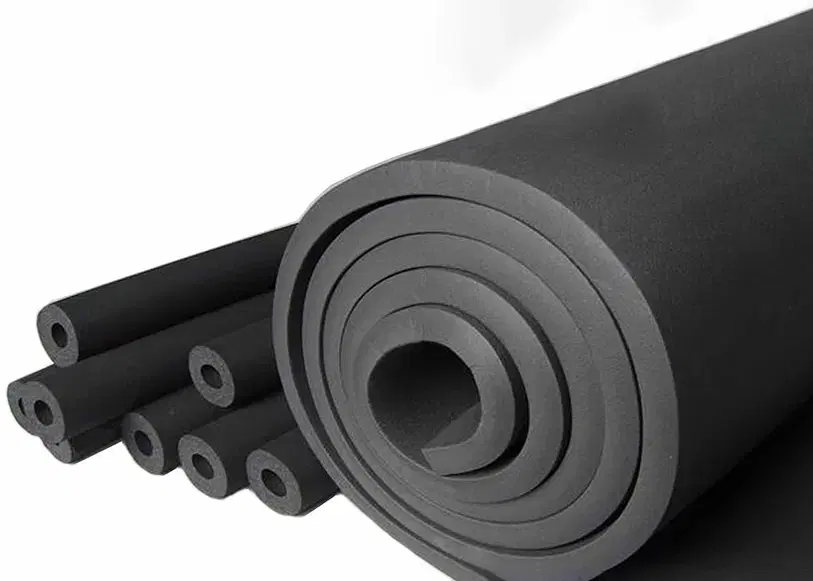
Nitrile rubber insulation is a flexible elastomeric insulation material used for thermal insulation, acoustic insulation, condensation control, and moisture protection in HVAC and refrigeration systems. It is commonly available in nitrile insulation sheet, nitrile rubber foam sheet, nitrile rubber roll insulation, and nitrile foam tube form.
NBR stands for Nitrile Butadiene Rubber. In HVAC insulation, NBR insulation, NBR rubber insulation, and NBR foam insulation are used to describe closed cell rubber insulation designed for pipes, ducts, and equipment.
The main purpose of nitrile rubber insulation is to reduce heat gain, prevent heat loss, control condensation, protect cold pipe insulation, and improve system energy efficiency. It is widely used as HVAC pipe insulation, HVAC duct insulation, AC pipe insulation, chilled water pipe insulation, and refrigeration pipe insulation.
Nitrile rubber insulation is used for chilled water piping insulation, refrigerant pipe insulation, AC copper pipe insulation, duct insulation, AHU insulation, FCU piping insulation, VRF piping insulation, hot pipe insulation, cold pipe insulation, and insulation for HVAC systems.
Compared with glass wool, rock wool, polyurethane foam, polyethylene foam, and EPDM insulation, nitrile rubber insulation is flexible, closed cell, moisture resistant, and suitable for anti condensation insulation. Its closed cell structure helps reduce water vapor movement and supports vapor barrier insulation performance.
Nitrile rubber insulation creates a thermal barrier around pipes, ducts, and equipment. This helps reduce unwanted heat gain on chilled water pipes and refrigerant lines, and helps reduce heat loss on hot water pipes.
Closed cell nitrile rubber insulation helps resist moisture movement. This makes it suitable for chilled water insulation, cold pipe insulation, refrigeration pipe insulation, and condensation control insulation.
When cold surfaces meet warm humid air, condensation can form. Nitrile rubber insulation for chilled water pipes, AC ducts, and refrigeration pipes helps reduce surface condensation and pipe sweating.
Nitrile foam insulation helps HVAC systems maintain the required temperature by reducing heat transfer. This supports better cooling performance, lower energy loss, and improved system efficiency.
Nitrile rubber with aluminium foil, nitrile rubber insulation with aluminium foil, and properly sealed joints help maintain vapor barrier continuity in HVAC duct insulation and chilled water pipe insulation.
Nitrile rubber acoustic insulation can help reduce minor vibration and sound transfer in ductwork, piping, and HVAC equipment areas, improving comfort in commercial and residential spaces.
Nitrile rubber tube insulation and nitrile foam insulation tube are used for pipe insulation, AC copper pipe insulation, refrigerant piping, chilled water piping, and hot water piping.
Nitrile rubber insulation sheet and nitrile sheet for insulation are used for duct insulation, equipment insulation, AHU ducting, and large surface applications.
Nitrile rubber roll insulation is suitable for ductwork, tanks, vessels, and large HVAC surfaces where sheet coverage is required.
Self adhesive nitrile insulation and adhesive nitrile rubber sheet options help speed up installation on ducts and flat surfaces.
Preformed pipe insulation sections are used for chilled water pipes, refrigerant pipes, MS pipes, GI pipes, and copper pipes.
Nitrile rubber duct insulation sheets are used for HVAC duct insulation, air duct insulation, duct wrap insulation, and duct liner insulation.
Insulation tape is used for joints, edges, pipe bends, elbows, fittings, and minor sealing support.
Proper adhesive application and joint sealing are important for vapor barrier insulation and anti condensation insulation.
A vapor barrier layer helps protect the insulation from water vapor ingress and improves long-term performance.
Outdoor lines may require aluminium cladding, UV protection, or protective jacketing to protect nitrile rubber insulation from weather exposure.
Used for AC copper pipes, refrigerant pipes, chilled water pipes, hot water pipes, and flexible pipe insulation.
Used for HVAC duct insulation, duct wrap insulation, air duct insulation, equipment insulation, and duct liner insulation.
Suitable for large ductwork, tanks, vessels, and wide HVAC insulation applications.
Useful for quick duct insulation and clean installation on flat HVAC surfaces.
Class 0 nitrile rubber insulation is selected for projects where higher fire performance requirements are specified.
Class 1 nitrile rubber insulation is used for ducting, piping, and HVAC projects where Class 1 fire rating is required.
Closed cell NBR insulation helps reduce condensation risk and moisture absorption in chilled water and refrigeration systems.
NBR PVC insulation is a flexible elastomeric insulation used in HVAC pipe insulation and duct insulation applications.
Acoustic nitrile rubber insulation supports sound control in ducts, AHUs, FCUs, and equipment areas.
Fire rated nitrile insulation and low smoke insulation are selected based on project specifications and safety requirements.
Nitrile rubber insulation for HVAC systems is used in air conditioning, ventilation, chilled water, and refrigeration projects.
Nitrile rubber insulation for chilled water pipes helps prevent condensation, pipe sweating, and cooling loss.
Nitrile rubber insulation for refrigeration pipes protects cold refrigerant lines from heat gain and moisture issues.
Nitrile rubber insulation for AC copper pipe is used in split AC, VRF, VRV, cassette AC, ducted AC, and package AC systems.
Nitrile rubber insulation for ductwork helps reduce duct heat gain, surface condensation, and energy loss.
Air conditioning pipe insulation and HVAC duct insulation improve cooling efficiency and comfort.
Refrigeration pipe insulation is important for cold storage, refrigeration plants, and cooling systems.
Cold storage applications require closed cell insulation, vapor barrier protection, and proper joint sealing.
Insulation for AHU and insulation for FCU systems helps maintain airflow temperature and reduce condensation.
Nitrile rubber insulation for VRF piping and VRV piping protects refrigerant lines and supports efficient operation.
Data center cooling systems use chilled water insulation, HVAC duct insulation, and pipe insulation material to support reliable cooling.
Hospital HVAC systems require clean, reliable, and well-sealed insulation for ducts, chilled water lines, and air conditioning systems.
Hotel HVAC systems use nitrile insulation services for chilled water pipes, ducts, AHUs, FCUs, and guest comfort systems.
Commercial pipe insulation and commercial HVAC insulation services help reduce operating costs and improve system life.
Industrial pipe insulation and industrial insulation services protect process cooling lines, HVAC systems, and utility piping.
Closed cell elastomeric nitrile rubber insulation helps reduce condensation formation on cold surfaces.
Sweat proof pipe insulation and pipe sweating insulation protect chilled water pipes, refrigerant pipes, and AC copper pipes.
Thermal pipe insulation helps reduce energy loss and supports better HVAC system efficiency.
Moisture resistant insulation helps protect pipes and ducts from water vapor related damage.
Flexible elastomeric insulation is easy to cut, shape, and install around pipes, ducts, elbows, fittings, valves, and flanges.
Nitrile rubber pipe insulation and nitrile rubber duct insulation are suitable for HVAC, refrigeration, chilled water, and air conditioning systems.
Nitrile foam insulation provides reliable thermal insulation for hot pipe insulation and cold pipe insulation.
Cold pipe insulation helps reduce heat gain on chilled water pipes and refrigerant pipes.
Hot pipe insulation helps reduce heat loss on hot water pipes and selected HVAC services.
With proper installation, joint sealing, and inspection, nitrile rubber insulation becomes a dependable low maintenance insulation solution.
Zenvent Engineering installs nitrile rubber insulation for chilled water pipes to reduce condensation and protect cold water lines.
Pipe sweating can damage ceilings, walls, floors, and equipment. Proper chilled water pipe insulation helps prevent moisture dripping from pipe surfaces.
Both chilled water supply and return lines require suitable insulation thickness based on temperature, humidity, pipe size, and site conditions.
Thickness selection may include options like 19mm nitrile rubber insulation, higher thicknesses, or project-specific insulation based on condensation risk.
Every joint must be sealed properly to maintain vapor barrier protection and avoid moisture entry.
Valves, elbows, flanges, and fittings should be insulated carefully because exposed fittings can become condensation points.
Outdoor chilled water pipe insulation may require nitrile rubber with aluminium foil, cladding, or UV protection.
Nitrile rubber insulation for AC ducts helps reduce heat gain through duct surfaces and supports better air delivery temperature.
Air duct insulation helps reduce condensation on cold duct surfaces, especially in humid areas.
Nitrile rubber acoustic insulation can support better acoustic comfort in HVAC duct systems.
Duct wrap insulation is used around rectangular ductwork, spiral ductwork, oval ductwork, and flexible ductwork.
Self adhesive nitrile rubber insulation sheet provides clean installation for selected duct surfaces.
Nitrile rubber insulation with aluminium foil improves surface protection and vapor barrier support for duct insulation.
Duct joint sealing is important to maintain insulation continuity and prevent condensation gaps.
Selection depends on whether the project needs pipe insulation, duct insulation, chilled water insulation, refrigeration insulation, or acoustic insulation.
Pipe diameter, duct size, total area, and installation space affect the type of nitrile insulation required.
Cold pipes, hot pipes, AC copper pipes, refrigerant pipes, and chilled water pipes need insulation based on operating temperature.
High surrounding temperature can increase heat gain and affect insulation thickness selection.
High humidity increases condensation risk and requires better vapor barrier protection.
Thickness may vary for AC copper pipes, chilled water pipes, refrigerant pipes, ducts, and hot water pipes.
Class 0 nitrile rubber insulation, Class 1 nitrile rubber insulation, low smoke insulation, or fire rated nitrile rubber insulation may be selected as per project requirement.
Water vapor resistant insulation is important for chilled water, cold pipe, and refrigeration applications.
Outdoor installations may require cladding, aluminium foil facing, or UV protection.
Self adhesive nitrile insulation is useful for selected duct surfaces, while non-adhesive insulation may be used with separate adhesive.
Nitrile rubber insulation price depends on thickness, form, brand, size, quantity, cladding, and installation labor.
Chilled water pipe insulation thickness is selected based on pipe temperature, ambient temperature, humidity, pipe size, and condensation risk.
Refrigerant pipe insulation requires proper tube size and thickness to prevent heat gain and condensation.
AC copper pipe insulation may use nitrile foam tube or NBR tube insulation depending on pipe diameter and system design.
Duct insulation thickness depends on duct temperature, location, airflow temperature, and condensation possibility.
Hot water pipe insulation helps reduce heat loss and improves energy efficiency.
Higher condensation risk may require thicker closed cell elastomeric insulation and stronger vapor barrier protection.
Energy saving targets can affect insulation thickness selection for HVAC pipe insulation and duct insulation.
Zenvent Engineering checks site conditions before recommending nitrile rubber insulation thickness.
Our team inspects pipe routes, duct surfaces, equipment areas, humidity levels, and existing insulation condition.
Pipe and duct surfaces must be clean and dry before installing nitrile rubber insulation.
Accurate measurement helps reduce material wastage and ensures proper fitting.
Nitrile rubber tube insulation and nitrile rubber sheet insulation are cut according to pipe, duct, elbow, valve, and fitting sizes.
Correct adhesive application helps avoid open joints, adhesive failure, and vapor gaps.
Nitrile insulation tube is fitted tightly around pipes to ensure smooth coverage.
Nitrile rubber insulation sheet is applied on duct surfaces with proper edge matching and sealing.
All longitudinal joints and butt joints are sealed to maintain condensation control insulation performance.
Elbows, fittings, valves, and flanges are insulated carefully to avoid exposed cold spots.
Vapor barrier continuity is maintained across joints, bends, fittings, and cladding areas.
Outdoor insulation may require aluminium foil, metal cladding, or weather protection.
Final inspection checks joints, thickness, surface finish, condensation risk points, and installation quality.
Proper edge matching prevents gaps and supports better thermal insulation.
Adhesive must be applied evenly to create a strong bond between insulation edges.
Longitudinal joints on pipe insulation must be sealed continuously.
Butt joints must be closed tightly to prevent vapor gaps.
Insulation tape may be used for selected joints, edges, and fitting areas.
Vapor gaps can lead to condensation, water ingress, and insulation failure.
Open joints reduce insulation performance and can cause pipe sweating.
A final condensation check helps ensure insulation is performing properly after installation.
Visual inspection checks the insulation surface, finish, cuts, and coverage.
Joint inspection ensures there are no gaps, loose edges, or open seams.
Adhesive bond checking helps detect weak joints and adhesive failure.
Vapor barrier inspection ensures moisture protection is maintained.
Condensation checks are important for chilled water pipes, refrigeration pipes, and AC ducts.
Surface damage inspection identifies tears, dents, cuts, and exposed pipe sections.
Thickness verification confirms the installed insulation matches project requirements.
Outdoor protection checking ensures cladding, jacketing, or foil facing is properly installed.
Zenvent Engineering can provide final inspection and handover support for completed insulation work.
Regular checking helps identify damaged nitrile rubber foam before major performance loss occurs.
Open joints should be repaired quickly to avoid condensation and moisture entry.
Condensation inspection helps detect insulation failure or incorrect thickness selection.
Adhesive failure can lead to loose insulation and vapor gaps.
Pipe sweating must be corrected with proper sealing, replacement, or thickness improvement.
Poorly sealed insulation can trap moisture and create mold risk.
Outdoor cladding should be checked for damage, water entry, and loose sections.
Damaged insulation should be repaired or replaced before it affects HVAC performance.
Zenvent Engineering supports nitrile insulation maintenance, repair, replacement, and AMC service planning.
Condensation may occur due to poor thickness selection, open joints, or damaged vapor barrier protection.
Open joints allow warm humid air to reach cold pipe surfaces.
Adhesive failure can happen due to poor surface cleaning, incorrect application, or site conditions.
A damaged vapor barrier can allow moisture to enter the insulation system.
Torn nitrile rubber insulation should be repaired to avoid energy loss and condensation.
Incorrect thickness may not control condensation properly in chilled water and refrigeration applications.
Outdoor nitrile rubber insulation may need UV protection or cladding.
Water ingress at joints can damage insulation and reduce performance.
Pipe sweating is usually caused by exposed cold surfaces, vapor gaps, or insufficient insulation.
Poor joint sealing can create moisture conditions that support mold growth.
Damaged cold pipe insulation can increase heat gain and reduce cooling performance.
Nitrile rubber insulation is closed cell and flexible, while glass wool is fibrous and often needs separate facing or protection for moisture control.
Rock wool is commonly used for fire and acoustic applications, while nitrile rubber insulation is widely selected for condensation control and HVAC pipe insulation.
Polyurethane foam is rigid, while nitrile rubber foam is flexible and easier to install around bends, ducts, and fittings.
Nitrile rubber insulation generally offers better elastomeric performance for HVAC and chilled water applications compared with basic polyethylene foam.
The difference between nitrile rubber and EPDM insulation depends on application, temperature, flexibility, and project specification.
Nitrile rubber insulation is preferred where closed cell moisture resistance and condensation control are important.
Closed cell insulation helps resist water vapor movement better than open cell insulation, making it suitable for chilled water and cold pipe insulation.
Nitrile rubber insulation cost depends on whether tube, sheet, roll, self adhesive sheet, or foil faced insulation is selected.
Nitrile rubber insulation tube price and nitrile rubber insulation sheet price vary based on size, thickness, and brand.
19mm nitrile rubber insulation price may differ from higher thickness options depending on project requirements.
Larger pipe diameters and duct surfaces require more insulation material.
Nitrile rubber insulation cost per sq ft or cost per meter depends on total quantity.
Self adhesive nitrile insulation can cost more than standard non-adhesive sheets.
Class 0 nitrile rubber insulation and fire rated nitrile insulation may affect material cost.
Project-approved options may include K Flex nitrile rubber insulation, Armaflex nitrile rubber insulation, Aerocell nitrile rubber insulation, Supreme nitrile rubber insulation, Superlon nitrile rubber, or equivalent specifications.
Outdoor applications may require nitrile rubber insulation with aluminium foil, cladding, or UV protection.
Aluminium cladding or jacketing adds to the overall nitrile rubber insulation installation cost.
Labor cost depends on site access, pipe height, duct complexity, fittings, and installation speed.
Repair, replacement, and preventive maintenance requirements affect long-term insulation cost.
Zenvent Engineering supplies nitrile insulation material for HVAC pipes, ducts, chilled water lines, and refrigeration systems.
We provide nitrile rubber pipe insulation for chilled water pipes, hot water pipes, refrigerant pipes, MS pipes, GI pipes, and copper pipes.
Our duct insulation services include nitrile rubber sheet insulation, duct wrap insulation, air duct insulation, and aluminium foil facing applications.
We install chilled water pipe insulation for commercial HVAC systems, hospitals, hotels, offices, malls, and industrial plants.
We provide AC copper pipe insulation for split AC, ducted AC, cassette AC, package AC, VRF, and VRV systems.
Our refrigeration pipe insulation solutions support refrigeration systems, cold storage, and cooling applications.
We install HVAC duct insulation for air conditioning ducts, AHU ducting, FCU systems, and ventilation networks.
Zenvent Engineering handles nitrile insulation installation with proper measurement, cutting, adhesive application, joint sealing, and final checking.
We repair damaged nitrile rubber insulation, open joints, torn sheets, condensation points, and adhesive failure areas.
We replace old insulation with fresh nitrile rubber insulation sheet, tube, roll, or foil faced insulation as per site needs.
Outdoor pipe and duct insulation can be protected with aluminium cladding or suitable jacketing.
Our commercial HVAC insulation services support offices, malls, hotels, hospitals, showrooms, and commercial buildings.
Our industrial insulation services support plants, process cooling areas, utility piping, and large HVAC systems.
Zenvent Engineering provides insulation AMC service for inspection, maintenance, repair, and replacement planning.
Zenvent Engineering understands HVAC systems, chilled water piping, refrigerant piping, ductwork, AHUs, FCUs, and air conditioning insulation requirements.
We help select the right nitrile insulation sheet, nitrile insulation tube, closed cell insulation, Class 0 insulation, Class 1 insulation, or aluminium foil faced insulation based on your project.
Our installation process focuses on clean cutting, proper adhesive application, tight joint sealing, vapor barrier continuity, and final inspection.
From supply and installation to repair, replacement, cladding, and maintenance, Zenvent Engineering provides complete nitrile rubber insulation services.
Nitrile rubber insulation is a flexible closed cell elastomeric insulation material used for HVAC pipe insulation, duct insulation, chilled water insulation, and refrigeration pipe insulation.