
01
Indoor Air Intake
The split AC indoor unit pulls warm air from the room through the front grille.
Zenvent Engineering provides professional Split Air-Conditioner solutions for homes, bedrooms, living rooms, apartments, offices, shops, clinics, restaurants, hotel rooms, classrooms, server rooms and small commercial spaces. A split AC is one of the most preferred room air conditioner systems because it offers efficient cooling, low noise indoor operation, flexible installation and better room comfort.
A split air conditioning system includes an indoor unit and an outdoor unit connected through refrigerant copper piping, drain piping and electrical wiring. Whether you need a wall mounted split AC, inverter split AC, non inverter split AC, ductless split AC, mini split AC, residential split AC or commercial split AC, Zenvent Engineering provides complete HVAC support from selection to installation and maintenance.
Our services include split AC supply, split AC installation, split AC maintenance, split AC repair, split AC cleaning, gas filling, copper piping, drain pipe work, leak testing, replacement and AMC service.
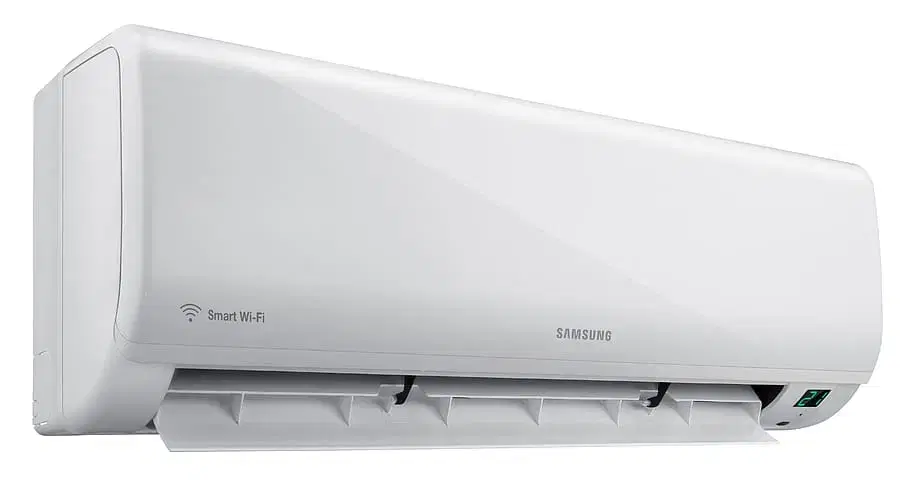
A Split Air-Conditioner is an air conditioning system that has two main units: an indoor unit and an outdoor unit. The indoor unit cools and circulates room air, while the outdoor unit removes heat from the room through the refrigerant cooling cycle.
In HVAC, split AC means a split type air conditioner where the cooling unit and compressor unit are separated. The indoor unit is installed inside the room, and the outdoor unit is installed outside the building.
The purpose of split air conditioning is to provide efficient room cooling with better comfort, quieter indoor operation and flexible installation. It is suitable for homes, offices, bedrooms, living rooms, shops and small commercial spaces.
A split AC indoor unit handles air intake, filtration, cooling and air distribution. The outdoor unit contains the compressor and condenser coil, which reject heat outside the room.
Split AC units are used in homes, bedrooms, living rooms, apartments, offices, clinics, classrooms, shops, restaurants, hotel rooms, server rooms and small commercial spaces.
A split AC separates the indoor cooling unit and outdoor compressor unit, which helps reduce indoor noise and provides better installation flexibility compared to some traditional room AC systems.
A split air conditioner works by absorbing heat from indoor air, transferring it through refrigerant and rejecting it outside through the outdoor unit.
The split AC indoor unit pulls warm air from the room through the front grille.
The air passes through split AC filters that help remove dust and improve airflow quality.
The filtered air passes over the evaporator coil. The refrigerant inside the coil absorbs heat from the room air and cools it.
The refrigerant carries absorbed heat from the indoor unit to the outdoor unit through copper piping.
The outdoor unit releases heat outside through the condenser coil and fan.
The compressor circulates refrigerant through the split AC system and supports continuous cooling.
The split AC remote control or thermostat allows temperature setting, fan speed control, mode selection and comfort adjustment.
During cooling, moisture from the air forms water inside the indoor unit. This water is removed through the split AC drain pipe.
A split air conditioning system includes indoor, outdoor, refrigerant, drainage, electrical and control components.
The indoor unit is installed inside the room and includes the evaporator coil, blower, filter, sensor and control parts.
The outdoor unit is installed outside and includes the compressor, condenser coil and outdoor fan.
The compressor moves refrigerant through the system and plays a key role in cooling performance.
The evaporator coil absorbs heat from indoor air and helps cool the room.
The condenser coil releases heat to the outside air.
The expansion valve controls refrigerant flow before it enters the evaporator coil.
The blower fan distributes cooled air inside the room.
Split AC filters help trap dust and maintain proper airflow.
Copper piping connects the indoor unit and outdoor unit and carries refrigerant between them.
The drain pipe removes condensate water from the indoor unit.
The remote controller allows easy operation of the split AC unit.
The thermostat or sensor measures room temperature and helps control cooling operation.
Electrical wiring connects the indoor unit, outdoor unit and power supply.
The control PCB manages communication, sensors and system functions.
Zenvent Engineering helps select the right split AC based on room size, cooling load, energy efficiency, usage and installation conditions.
A wall mounted split AC is installed on the wall and is commonly used in homes, bedrooms, offices and shops.
A single split AC includes one indoor unit connected to one outdoor unit.
A mini split AC is a compact ductless air conditioner suitable for individual rooms and small spaces.
A ductless split AC does not need ductwork and is easier to install in many residential and small commercial spaces.
An inverter split AC adjusts compressor speed based on cooling demand, helping improve energy efficiency and comfort.
A non inverter split AC works at fixed compressor speed and is suitable for standard cooling needs.
A cooling only split AC is designed for cooling operation.
A hot and cold split AC can provide both cooling and heating depending on system design.
Residential split AC systems are suitable for homes, bedrooms, apartments and living rooms.
Commercial split AC systems are used in offices, shops, clinics, restaurants, hotel rooms and small commercial spaces.
Smart split AC units may include WiFi control, smart control features and remote operation options.
Energy efficient split AC systems help reduce power use and improve long-term operating value.
Split air conditioners are suitable for individual room cooling and small-area air conditioning.
Split AC for home cooling provides reliable comfort for daily use.
A low noise split AC for bedroom use supports comfortable sleep and quiet cooling.
Split AC for living room spaces helps maintain comfort for family areas and guest seating.
Apartment split AC systems are practical where ductwork or large systems are not required.
Split AC for office rooms provides efficient cooling for cabins, meeting rooms and small workspaces.
Split AC for shops helps maintain customer comfort and product display areas.
Clinics use split air conditioners for consultation rooms, waiting areas and treatment spaces.
Split AC for restaurants can be used in small dining areas, private rooms and service spaces.
Hotel room split AC systems provide individual room temperature control.
Split AC for classrooms helps maintain a comfortable learning environment.
Commercial split AC units are suitable for compact offices, retail stores, salons and service rooms.
Split AC for server rooms can support cooling where temperature control is required.
Split AC systems are suitable for both residential and commercial HVAC projects where individual room cooling is needed.
A split air conditioner offers comfort, efficiency and flexible installation for different room types.
Split AC systems are designed to cool individual rooms quickly and effectively.
Since the compressor is placed in the outdoor unit, indoor noise is lower compared to some other AC systems.
A wall split AC saves floor space and fits well in compact rooms.
Modern split air conditioners offer clean indoor unit designs suitable for homes and offices.
Remote control and thermostat features allow simple temperature adjustment.
Split AC is suitable for bedrooms, living rooms, home offices, cabins, shops and small commercial rooms.
Inverter split AC and high efficiency split AC models help improve energy performance.
A ductless split AC does not require large ductwork, making installation simpler in many spaces.
Indoor and outdoor units can be placed based on room layout, wall space, pipe route and access.
Split AC systems provide dedicated cooling for each room, helping improve personal comfort.
Choosing the right split AC is important for cooling performance, electricity use and long-term reliability.
Room size helps decide whether you need a 1 ton split AC, 1.5 ton split AC, 2 ton split AC or higher capacity system.
Cooling load depends on room area, sunlight, occupancy, equipment heat, insulation and usage.
Correct AC tonnage helps avoid low cooling, high electricity consumption and poor comfort.
Inverter split AC is suitable for energy efficient cooling, while non inverter AC can be selected for standard usage.
A 5 star AC or high efficiency split AC may offer better long-term energy savings.
The indoor unit should be placed where airflow can cover the room properly.
The outdoor unit should be installed in a ventilated location with proper service access.
Copper pipe length affects installation cost, refrigerant requirement and system performance.
Low noise split AC is important for bedrooms, clinics, hotel rooms and office rooms.
Anti dust filter, air purifier features and easy-clean filters can improve indoor comfort.
Daikin AC, LG AC, Mitsubishi AC, Voltas AC, Samsung AC, Panasonic AC, Blue Star AC, Lloyd AC, Hitachi AC, Carrier AC, Haier AC, Godrej AC and O General AC options may vary in features, warranty and price.
Split AC price depends on capacity, brand, inverter technology, energy rating, installation work and service requirement.
Zenvent Engineering provides professional split AC installation for homes, offices and commercial spaces.
Our team checks room size, wall space, outdoor unit location, drainage, electrical point and pipe route.
The indoor unit location is planned for proper airflow and easy maintenance.
The outdoor unit location is selected for ventilation, safety and service access.
Wall brackets are installed securely to support the indoor or outdoor unit as required.
Split AC copper piping connects the indoor and outdoor units for refrigerant flow.
Drain pipe installation removes condensate water safely from the indoor unit.
Electrical wiring is completed with proper safety, load and connection standards.
Vacuuming removes air and moisture from the refrigerant circuit before operation.
Refrigerant level is checked to confirm proper cooling performance.
Testing and commissioning include cooling check, airflow check, drainage check, remote operation and system performance verification.
Correct copper piping is important for split AC performance, cooling efficiency and long-term reliability.
Copper pipe size should match the AC capacity and manufacturer requirement.
Pipe length should be planned carefully to reduce cooling loss and avoid performance issues.
Pipe insulation helps prevent condensation and energy loss.
Leak testing helps identify refrigerant leakage before system operation.
Vacuuming removes moisture and air from the copper piping and refrigerant circuit.
Refrigerant charging is done when required after checking system condition and leakage.
Copper pipes should be supported and protected from damage, vibration and bending.
Common mistakes include poor insulation, loose flare joints, incorrect pipe bending, improper slope and lack of leak testing.
Regular split AC maintenance helps improve cooling, reduce breakdowns and extend system life.
Split AC filter cleaning improves airflow and indoor air quality.
Indoor unit cleaning removes dust from the grille, blower and internal parts.
Outdoor unit cleaning improves heat rejection and cooling performance.
Evaporator coil cleaning helps restore cooling efficiency.
Condenser coil cleaning supports better outdoor unit performance.
Blower cleaning improves airflow and reduces indoor unit noise.
Drain line cleaning helps prevent water leakage and blockage.
Refrigerant level checking helps detect leakage or gas shortage.
Electrical connections should be inspected for safety and reliable operation.
Remote controller checking ensures proper temperature and mode operation.
Zenvent Engineering provides split AC preventive maintenance and AMC service for homes, offices, shops, clinics, restaurants, hotel rooms and commercial spaces.
Split AC problems should be checked by trained HVAC technicians to avoid further damage.
Split AC not cooling may happen due to dirty filters, low refrigerant, coil blockage, compressor issue, thermostat problem or poor airflow.
Low airflow can be caused by dirty filters, blower dust, coil blockage or fan issues.
Split AC water leakage may happen due to blocked drain pipe, poor drain slope or dirty indoor unit.
Indoor unit noise can occur due to blower imbalance, loose parts or dust buildup.
Outdoor unit noise may be caused by fan motor issues, compressor vibration or loose mounting.
Dirty filters reduce cooling, airflow and energy efficiency.
Blocked coils reduce heat transfer and affect cooling performance.
Refrigerant leakage causes low cooling and should be repaired before gas filling.
Compressor problems can affect the complete cooling cycle.
Remote control problems may be due to battery, sensor or control PCB issues.
Drain pipe blockage can cause indoor water dripping.
High electricity consumption may happen due to dirty filters, low refrigerant, poor maintenance, wrong capacity or continuous operation.
Error codes help identify sensor faults, communication issues, electrical problems or system faults.
Comparing split AC with other systems helps select the right HVAC solution.
A window AC is installed in a window or wall opening, while a split AC has separate indoor and outdoor units for better flexibility and lower indoor noise.
A split AC is wall mounted, while a cassette AC is ceiling mounted and better for larger spaces with uniform airflow needs.
A split AC cools individual rooms directly, while a ducted AC distributes air through ductwork.
A package AC is a single cabinet system often used for larger commercial spaces, while split AC is ideal for individual room cooling.
A split AC connects one indoor unit to one outdoor unit. A multi split AC connects multiple indoor units to one outdoor unit.
A VRF system is used for larger multi-zone HVAC projects, while split AC is suitable for individual rooms and smaller spaces.
A portable AC can be moved, while a split AC provides fixed installation with better cooling performance for regular use.
Split air conditioner price depends on capacity, brand, features, installation and service requirements.
1 ton split AC, 1.5 ton split AC and 2 ton split AC options have different price ranges based on cooling capacity.
Inverter AC price is usually different from non inverter AC due to compressor technology and energy efficiency features.
5 star AC and high efficiency split AC models may have higher initial cost but better operating value.
Daikin air conditioner price, LG AC price, Voltas AC price, Samsung AC price, Mitsubishi AC price, Blue Star AC price, Lloyd AC price, Hitachi AC price, Carrier AC price, Panasonic AC price and O General AC price may vary by model and features.
Longer copper piping can increase installation cost.
High-rise installation, difficult outdoor unit access and long pipe routes can affect split AC installation cost.
Drain pipe length and routing can influence installation work.
Electrical wiring, safety devices and power point preparation can affect total installation cost.
WiFi control, smart control, air purifier features and advanced filters may affect the split AC cost.
Split AC service cost depends on usage, system condition, cleaning requirement and maintenance frequency.
Zenvent Engineering provides complete split air conditioner services for residential and commercial cooling needs.
We help supply suitable split AC units based on room size, capacity, brand preference and application.
Our split AC installation service includes indoor unit installation, outdoor unit installation, copper piping, drain pipe connection, electrical wiring, vacuuming and commissioning.
We provide split AC maintenance to improve airflow, cooling and system reliability.
Our technicians inspect and repair low cooling, water leakage, noise, compressor problems, electrical faults and error codes.
Split AC cleaning includes filter cleaning, indoor unit cleaning, coil cleaning, blower cleaning, drain line cleaning and outdoor unit cleaning.
We provide gas filling after checking refrigerant leakage and system condition.
Zenvent Engineering provides copper piping installation, insulation, support and replacement.
Proper drain pipe work helps prevent water dripping and indoor leakage.
Leak testing helps identify refrigerant leakage before charging and operation.
We support replacement of old, inefficient or faulty split AC systems.
Our split AC AMC service is suitable for homes, offices, shops, clinics, restaurants, hotel rooms and small commercial spaces.
Zenvent Engineering delivers reliable HVAC support for split air conditioner supply, installation, repair and maintenance.
Our team understands split AC installation, copper piping, drain piping, electrical wiring, vacuuming and commissioning.
We help select the right split AC capacity based on room size, cooling load and usage.
We provide split AC services for homes, bedrooms, living rooms, offices, shops, clinics, restaurants and commercial spaces.
From supply and installation to maintenance, repair, cleaning, gas filling and AMC, Zenvent Engineering provides complete support.
Our focus is safe installation, neat piping, proper drainage, correct testing and dependable cooling performance.
A split air-conditioner is an AC system with an indoor unit and outdoor unit connected by refrigerant copper piping.